You watched the water rise from your front window. Maybe it was the river a half-mile away that crested its banks overnight. Maybe a tropical storm parked itself over your neighborhood and dumped 14 inches of rain in 36 hours. Or maybe the storm drain at the end of your street backed up and sent a foot of murky water into your garage, then your living room, then your kitchen.
However the flood water got in, you're now staring at a home filled with contaminated water, ruined belongings, and an overwhelming amount of damage that needs professional attention.
Flood damage restoration is different from standard water damage restoration. The water is dirtier. The damage goes deeper. The insurance works differently. And the health risks are real.
In our 15 years of restoring flood-damaged homes across the country, we've learned that the homeowners who recover fastest are the ones who understand what they're dealing with and get professional help quickly.
This page covers everything you need to know — the contamination risks, the restoration process, what your insurance does and doesn't cover, real costs, and exactly what to do right now if your home has flooded. If you need immediate help, call (844) 426-5801. Our IICRC-certified flood restoration crews respond 24/7 with a 1-hour arrival guarantee.
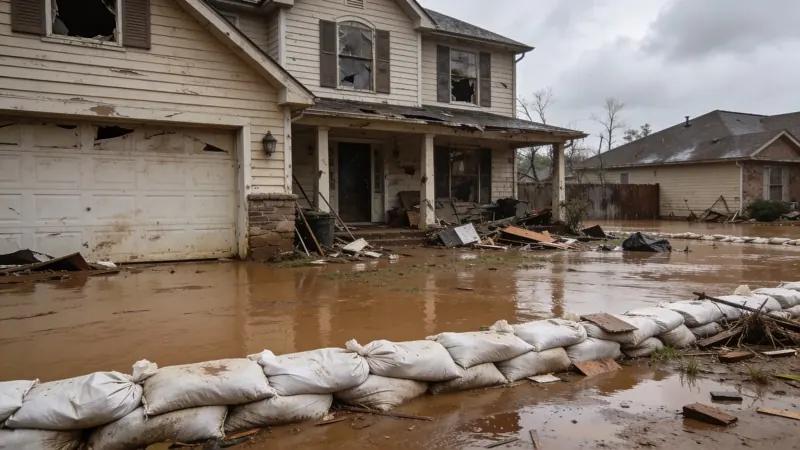
Flood Damage vs. Water Damage: Why the Distinction Matters
Most homeowners use "flood damage" and "water damage" interchangeably. Insurance companies don't — and that distinction will determine whether your claim gets paid and by which policy.
Water damage refers to damage caused by internal sources: a burst pipe, a washing machine supply line failure, a toilet overflow, a roof leak. These are "sudden and accidental" events, and standard homeowners insurance (your HO-3 policy) typically covers them.
Flood damage refers to damage caused by external rising water: a river overflowing, storm surge, flash flooding from heavy rainfall, a creek that jumps its banks, mudflow. Standard homeowners insurance explicitly excludes flood damage. You need a separate flood insurance policy, either through the National Flood Insurance Program (NFIP) or a private flood insurer.
Here's where we see homeowners get blindsided. A family in Houston calls us after a major rainstorm. Their neighborhood storm drains overwhelmed and three inches of water came into the house through the front door and garage. They assume their homeowners insurance covers it.
It doesn't. That's flood damage by definition — water that entered the home from outside, from a natural event. Without a flood insurance policy, they're paying out of pocket.
Where the Line Gets Blurry
There are gray areas that create real insurance headaches:
- Rain through a damaged roof during a storm — this is often covered by homeowners insurance as wind damage, not flood damage. The water came from above, not from rising water below.
- Sewer backup during heavy rain — if the municipal sewer system backs up into your home, this isn't covered by standard homeowners insurance OR flood insurance. You need a sewer backup rider (endorsement) on your homeowners policy. Roughly 30% of homeowners have this rider, according to the Insurance Information Institute.
- Sump pump failure during a storm — the pump failed because of the storm, but the water entered from below. Most homeowners insurance doesn't cover this. Some policies have a sump pump failure endorsement.
- Flash flooding from a burst water main on your street — even though a pipe burst caused it, the water entered your home as external rising water. Most insurers classify this as flood damage.
The takeaway: if water enters your home from the outside and rises, regardless of why, it's almost certainly classified as flood damage. Get a flood insurance policy before you need one. We've seen too many families learn this lesson the hard way.
Why This Matters for Restoration
The flood-vs-water-damage distinction also matters for restoration because of contamination. A burst supply line in your kitchen releases Category 1 (clean) water. We can often dry carpet, save drywall, and restore most materials.
Flood water from external sources is always Category 3 — contaminated. That changes everything about how we approach the restoration. More materials come out. More antimicrobial treatment goes in. The job takes longer and costs more. There's no shortcut.
Why Flood Water Is Always Category 3 (and What That Means for Your Home)
The Institute of Inspection, Cleaning and Restoration Certification (IICRC) classifies water damage into three categories based on contamination level. Under ANSI/IICRC S500 standards, all flood water from external sources is automatically classified as Category 3, the most contaminated designation.
Here's why that matters so much.
What Is in Flood Water
Flood water isn't just rain that found its way into your house. By the time external water reaches your home, it has picked up everything in its path:
- Raw sewage — Flood water routinely overwhelms municipal sewage systems. Sewer lines back up, treatment plants overflow, and septic systems fail. If your neighborhood flooded, there's sewage in that water. Period.
- Agricultural chemicals — Pesticides, herbicides, fertilizers, and animal waste from upstream farms and fields.
- Industrial contaminants — Petroleum products, solvents, heavy metals, and chemicals from flooded businesses, gas stations, and storage facilities.
- Bacteria and pathogens — E. coli, Salmonella, Hepatitis A, Leptospira, and dozens of other disease-causing organisms thrive in flood water.
- Debris — Soil, sand, decaying organic matter, dead animals, and physical debris that compounds the contamination.
We restored a home outside of Nashville after a creek overflowed during a spring storm. Two inches of water sat in the house for about 18 hours. The homeowner said the water looked "mostly clean" and wanted to know if we could just dry the carpet and drywall.
We took a swab sample from the carpet backing. The lab results came back positive for E. coli and fecal coliform at levels that exceeded safe occupancy standards by a factor of 40. Two inches of "clean-looking" water.
This is why IICRC standards don't make exceptions for flood water that appears clean. It's all Category 3. Every porous material it touches must be removed.
Health Hazards of Flood Water Exposure
This isn't something we bring up to scare homeowners. It's something we bring up because we've seen people wade through flood water in shorts and flip-flops to save a box of photographs, and then end up in the emergency room.
Immediate health risks from flood water contact:
- Skin infections and rashes — Contaminated water causes skin irritation, infections, and rashes, especially through cuts or open wounds.
- Gastrointestinal illness — Ingesting even small amounts (splash in the mouth, touching your face with contaminated hands) can cause severe stomach illness, vomiting, and diarrhea.
- Eye and respiratory irritation — Flood water fumes and contact cause irritation to eyes, nose, and throat.
- Leptospirosis — A bacterial infection spread through animal urine in flood water. Causes high fever, muscle pain, and can lead to kidney and liver failure if untreated.
Longer-term health risks:
- Mold exposure — Flood-damaged homes develop aggressive mold growth within 24-48 hours. Mold spores cause respiratory problems, allergic reactions, and can trigger asthma attacks, especially in children, the elderly, and immunocompromised individuals.
- Chemical exposure — Residual contaminants absorbed into building materials can off-gas for weeks or months if not properly remediated.
The Centers for Disease Control and Prevention (CDC) and FEMA both recommend that homeowners avoid contact with flood water whenever possible and leave cleanup to professionals with proper PPE.
Our crews wear full PPE on every flood damage job — Tyvek suits, P100 respirators, chemical-resistant gloves, and rubber boots. We set up HEPA air scrubbers before we start demolition to capture airborne contaminants. This isn't optional. This is how flood damage restoration is supposed to be done.
Dealing With Flood Damage Right Now?
Our IICRC-certified crews respond within 1 hour with full contamination protocols.
📞 Call (844) 426-5801The Flood Damage Restoration Process for Flooded Homes
After 15 years and thousands of flood damage jobs, here's exactly how we restore a flooded home, step by step. Understanding this process helps you know what to expect, how long it takes, and what your insurance claim documentation should include.
Step 1: Safety Assessment (Before Anyone Enters)
We don't walk into a flooded home until we know it's safe. The first thing our crew does on arrival is assess three things:
Electrical hazards. If the electrical panel was submerged or water reached outlets and wiring, there's a risk of electrocution, even after the water recedes. We verify the main breaker is off. If the panel itself was submerged, we call for a licensed electrician to evaluate before we proceed.
Structural integrity. Flood water weakens foundations, undermines footings, and saturates load-bearing walls. If we see cracks in the foundation, bowing walls, or sagging floors, we bring in a structural engineer before entering.
Gas leaks. If the home has natural gas, we check for gas odors and confirm the gas is shut off. Flood water can shift gas lines and damage connections.
This assessment takes 30-60 minutes and it has kept our crews safe on jobs where a floor collapsed in a back room or where a flooded electrical panel was still energized.
Step 2: Category 3 Water Extraction
Once the building is cleared for entry, we begin extraction. Flood water extraction is more equipment-intensive than standard water extraction because of the contamination level and the volume of water involved.
Equipment we deploy for flood extraction:
- Truck-mounted extractors — Our primary extraction units pull contaminated water at 500+ gallons per hour and discharge it outside the structure. On major floods, we run two trucks simultaneously.
- Submersible pumps — For standing water deeper than 6 inches, we drop submersible pumps that handle high-volume extraction from basements, crawl spaces, and ground floors.
- Portable extractors — Once the standing water is out, portable units extract water from carpet, pad, and saturated floors.
- Wet/dry vacuums — For detail extraction in tight spaces, closets, and utility rooms.
Our crews wear full PPE throughout extraction — Tyvek suits, P100 respirators, chemical-resistant gloves, rubber boots. We maintain containment protocols to prevent cross-contamination to unaffected areas of the home.
A typical single-story home with 4-6 inches of flood water throughout takes 4-8 hours for complete extraction. A basement with 2-3 feet of standing water can take a full day with pumps running continuously.
Step 3: Contaminated Material Removal (Demolition)
This is the step that shocks most homeowners. After a flood, we're not drying your carpet — we're removing it. We're not saving your drywall — we're cutting it out.
Everything porous that flood water touched must go:
- Carpet and carpet pad — 100% removal. No exceptions. Carpet pad is essentially a sponge that absorbs contaminated water and can't be decontaminated.
- Drywall — Cut out to a minimum of 24 inches above the visible water line. In our experience, we often go to 48 inches because moisture wicks upward through drywall far above where the water sat. We use moisture meters to determine the actual cut line on every wall.
- Insulation — All insulation in affected wall cavities is removed. Fiberglass batt insulation and cellulose both absorb contaminated water and can't be cleaned.
- Baseboards and trim — Removed to allow wall cavities to dry and to access hidden contamination.
- Vinyl flooring — Lifted and removed. Water gets trapped underneath vinyl, and the subfloor beneath needs to be treated and dried.
- Lower cabinetry — Kitchen and bathroom base cabinets are often constructed from particleboard. If flood water reached the cabinet box, it swells, delaminates, and must be replaced. Solid wood cabinets can sometimes be saved with proper drying.
Step 4: Structural Cleaning and Antimicrobial Treatment
After demolition, the structural skeleton of your home is exposed — studs, floor joists, subfloor, ceiling joists, sheathing. These non-porous and semi-porous materials can be saved, but they need aggressive cleaning and treatment.
Our cleaning protocol includes:
- Pressure washing or scrubbing structural framing to remove visible contamination, silt, and debris.
- HEPA vacuuming all surfaces to remove particulate contaminants.
- Antimicrobial treatment — We apply EPA-registered antimicrobial agents to all structural surfaces. This kills bacteria, inhibits mold growth, and decontaminates the wood framing and subfloor.
- HEPA air scrubbers running throughout the home to filter airborne contaminants and mold spores released during demolition.
This step is where corners get cut by less experienced companies, and it's where problems show up six months later. If structural members aren't properly cleaned and treated, bacterial contamination can persist, and mold colonizes the framing before the new drywall goes up.
Step 5: Industrial Drying and Dehumidification
With contaminated materials removed and structural surfaces cleaned, we set up our structural drying equipment. Flood damage drying takes longer than standard water damage drying because the saturation is deeper and more widespread.
Equipment deployed for flood drying:
- LGR (Low Grain Refrigerant) dehumidifiers — An industrial LGR dehumidifier removes 15-20 gallons of moisture per day from the air. A flooded home typically needs 2-4 units running simultaneously.
- High-velocity air movers — Positioned strategically to create airflow across wet surfaces, subfloor, studs, concrete slabs. We typically deploy 6-12 air movers for a flooded home.
- Injectidry wall drying systems — These create directed airflow inside wall cavities through small injection ports.
- Floor mat drying systems — For hardwood subfloors and concrete slabs, mat systems create suction and airflow directly at the floor surface.
We take moisture readings daily. For wood framing and subfloor, we need moisture content below 16%. For concrete slabs, we use relative humidity testing and target readings below 75% RH at depth. This typically takes 5-7 days for flood damage, sometimes longer for concrete slab foundations.
Step 6: Mold Prevention and Air Quality Testing
Flood water plus time equals mold. It's that straightforward. Because flood water is Category 3 contaminated and saturates building materials deeply, mold growth after flooding is more aggressive than after a clean water event.
Our mold prevention protocol after flood damage includes:
- Second round of antimicrobial treatment after drying is complete, targeting any areas where moisture persisted longest.
- HEPA air scrubbers running continuously during the drying period and for 24-48 hours after drying is complete.
- Air quality testing — We pull air samples and have them analyzed by an independent lab. We're looking for mold spore counts that are at or below outdoor ambient levels.
- Surface sampling if any suspected growth is observed during the drying phase.
If mold has already colonized, which happens when flood water sits for more than 48-72 hours before professional restoration begins, the project transitions to a combined flood restoration and mold remediation scope. That adds time and cost, but skipping it isn't an option if you want your family living in a safe home.
Step 7: Structural Rebuild
Once the home is dry, clean, and cleared by air quality testing, we rebuild. Everything that came out goes back in, with new materials.
Typical rebuild scope after flood damage:
- New drywall, taped, mudded, and finished
- New insulation in wall cavities (we recommend mold-resistant options where budget allows)
- New baseboards and trim
- New carpet and pad, or new flooring (many homeowners upgrade to water-resistant LVP flooring after a flood, and we recommend it)
- Cabinet replacement or reinstallation
- Paint throughout affected areas
- Electrical and plumbing inspection and any needed repairs
Rebuild timelines vary widely based on severity and material availability. A single-story home with moderate flood damage typically takes 2-4 weeks for rebuild. Extensive damage involving kitchen and bathroom reconstruction can take 4-8 weeks.
Step 8: Final Inspection and Documentation
We conduct a final walkthrough with moisture verification, confirming every structural component reads below its acceptable threshold. We compile a complete documentation package for your insurance claim:
- Timestamped photos of all damage before restoration began
- Daily moisture readings throughout the drying process
- Equipment placement logs
- Antimicrobial treatment documentation
- Air quality test results
- Detailed scope of work with line items
- Final moisture verification readings
This documentation package is what your flood insurance adjuster needs to process your claim. In our experience, thorough documentation is the single biggest factor in getting claims approved at the full scope.
What Can Be Saved vs. What Must Be Replaced After a Flood
One of the most common questions we hear from homeowners after a flood is "Can any of this be saved?" The answer depends on the material, how long it was submerged, and the contamination level.
| Material | Verdict | Notes |
|---|---|---|
| Carpet and pad | Replace | Pad can't be decontaminated after Category 3 |
| Drywall (below flood line) | Replace | Paper facing absorbs contamination, feeds mold |
| Insulation | Replace | Absorbs and retains contaminated water |
| Structural framing | Save | Clean, treat with antimicrobials, dry |
| Concrete/masonry | Save | Porous but cleanable with treatment |
| Hardwood flooring | Depends | ~40% salvageable if dried within 24 hours |
| Solid wood furniture | Save | Must be cleaned quickly before mold sets in |
| Particleboard/MDF | Replace | Swells and delaminates when saturated |
Materials That Almost Always Must Be Replaced
- Carpet and carpet pad — Carpet pad can't be decontaminated after Category 3 water exposure. We recommend replacement 100% of the time after flood water contact.
- Drywall below the flood line — Drywall is made of paper-faced gypsum. Paper is an organic material that absorbs contaminated water and becomes a mold food source.
- Fiberglass and cellulose insulation — Both materials absorb and retain contaminated water. Full removal and replacement.
- Particleboard and MDF furniture/cabinets — These engineered wood products swell, delaminate, and fall apart when saturated.
- Mattresses, upholstered furniture, and pillows — Porous materials that absorb contaminated water throughout. Not salvageable after flood exposure.
- Paper products, books, and documents — The contamination risk from Category 3 water makes restoration impractical for most documents.
Materials That Can Often Be Saved
- Structural framing (studs, joists, rafters) — Solid lumber can be cleaned, treated with antimicrobial agents, and dried. In almost every flood restoration, the structural framing survives.
- Concrete and masonry — Concrete block, poured concrete, brick, and stone can be cleaned and dried.
- Hardwood flooring — Depends on flood duration. About 40% of flooded hardwood floors can be saved if we get to them quickly.
- Solid wood furniture — Solid wood tables, dressers, and chairs can be cleaned, sanitized, and restored.
- Metal items — Appliances, tools, and metal shelving can be cleaned and sanitized. Electrical appliances that were submerged need professional inspection before use.
- Glass, ceramic, and plastic — Non-porous items can be cleaned and sanitized.
NFIP Flood Insurance: What It Covers, What It Pays, and How to File
Standard homeowners insurance doesn't cover flood damage. This is the single most important insurance fact every homeowner in a flood-prone area needs to know. For flood coverage, you need a separate policy through the National Flood Insurance Program (NFIP via FloodSmart.gov) or a private flood insurance provider.
What NFIP Flood Insurance Covers
Building coverage (up to $250,000 for residential):
- Structural components: foundation, walls, floors, ceilings, staircases
- Electrical and plumbing systems
- HVAC equipment, water heaters, and built-in appliances
- Permanently installed carpeting over unfinished flooring
- Permanently installed paneling, wallboard, bookcases, and cabinets
- Window blinds and detached garages (up to 10% of building coverage)
Contents coverage (up to $100,000 for residential):
- Personal belongings: clothing, furniture, electronics
- Curtains, portable appliances, portable microwave
- Carpeting not included in building coverage
- Washers, dryers, and food freezers (and food in them)
- Certain valuable items up to $2,500 (artwork, furs)
What NFIP Does NOT Cover
- Temporary living expenses — If you can't live in your home during restoration, NFIP doesn't cover hotel costs, rental housing, or meals.
- Cars and vehicles — Flood-damaged vehicles are covered by your auto insurance comprehensive coverage, not flood insurance.
- Landscaping, decks, patios, and pools — Exterior structures and landscaping are excluded.
- Mold damage that could have been prevented — If you delay cleanup and mold develops, the insurer may argue the mold damage was preventable and deny that portion of the claim.
- Finished basement improvements — NFIP provides very limited coverage for basements.
- Business income or financial losses — Only physical property damage is covered.
NFIP Claim Filing Process
- Contact your insurance agent within 60 days of the flood event. Don't wait. The sooner you file, the sooner an adjuster is assigned.
- Document everything before cleanup begins. Photograph and video all damage, every room, every wall, every damaged item.
- Make a list of damaged items with descriptions and estimated values. Include receipts if you have them.
- Keep damaged items until the adjuster has seen them. If you must remove items for health or safety reasons, photograph them first.
- Mitigate further damage — You're expected to take reasonable steps to prevent additional damage. NFIP covers reasonable mitigation costs.
- The adjuster visits — NFIP sends an adjuster to inspect your property, assess damage, and prepare a scope of loss. Our documentation package provides the adjuster with moisture readings, contamination documentation, and a detailed scope of work.
- Claim payment — NFIP pays claims based on the adjuster's assessment. If you disagree with the assessment, you can appeal.
Private Flood Insurance vs. NFIP
Private flood insurance has grown significantly in recent years and offers some advantages over NFIP:
- Higher coverage limits — NFIP caps residential building coverage at $250,000 and contents at $100,000. Private policies can offer higher limits.
- Additional living expenses — Some private policies cover temporary housing costs that NFIP excludes.
- Replacement cost value — NFIP pays actual cash value (depreciated) on many items. Some private policies offer replacement cost value.
- Faster claims processing — Private insurers often process claims faster than the NFIP adjuster network.
- Potentially lower premiums — Depending on your risk profile and property, private flood insurance may cost less than NFIP.
Whether you carry NFIP or private flood insurance, our team handles the documentation and works with your adjuster to ensure the claim reflects the full scope of damage. Call (844) 426-5801 and we coordinate with your insurance carrier from day one.
Real Flood Damage Restoration Costs by Severity
We're not going to tell you "every flood is different" and leave it at that. Here are real cost ranges based on the flood damage restoration jobs we've completed, broken down by severity.
| Severity | Water Depth | Cost Range | Timeline |
|---|---|---|---|
| Minor | 1-4 inches, limited area | $5,000-$10,000 | 2-3 weeks |
| Moderate | 6-12 inches, main living areas | $10,000-$18,000 | 3-5 weeks |
| Severe | 2+ feet, potential structural | $18,000-$50,000+ | 4-8+ weeks |
Minor Flooding (1-4 inches of water, limited area)
Typical cost: $5,000-$10,000
This is what we see most often — a heavy rainstorm overwhelms a window well, a sump pump fails during a thunderstorm, or a few inches of water enters through the garage door. The affected area is usually a basement, garage, or a section of the ground floor.
Moderate Flooding (6-12 inches of water, main living areas)
Typical cost: $10,000-$18,000
This is a full ground-floor flood event — the kind that hits after a prolonged storm, flash flooding, or when a nearby creek overflows. Water reaches 6-12 inches throughout the main living areas. Cabinetry, appliances, and lower sections of all walls are affected.
Severe Flooding (2+ feet of water, potential structural damage)
Typical cost: $18,000-$50,000+
This is major flood damage — the kind that follows a hurricane, a river crest, or catastrophic flash flooding. Two feet or more of water throughout the home, often for an extended period. Electrical panels submerged. HVAC systems flooded. Potential foundation damage adds complexity and cost.
Cost Factors That Drive Price Up or Down
- Flood water depth — Every additional inch increases demolition, treatment, and rebuild scope.
- Duration of submersion — Water that sat for 12 hours causes less damage than water that sat for five days.
- Slab vs. crawl space vs. basement — Slab foundations dry slowly because concrete holds moisture.
- Number of affected rooms — More rooms equals more equipment, labor, and materials.
- Materials involved — Custom cabinetry, hardwood flooring, and high-end finishes cost more to replace.
- Mold remediation scope — If mold has established before restoration begins, add $2,000-$10,000+ depending on extent.
- Geographic location — Restoration costs in Houston, Miami, and coastal metros tend to run 10-20% above national averages.
Get a Restoration Estimate
Our team provides detailed scoping and works directly with your insurance adjuster.
📞 Call (844) 426-5801Seasonal Flood Risks by Region: Know Your Exposure
Flooding isn't random. Certain regions face predictable flood risks at predictable times of year. Understanding your region's flood season helps you prepare and act fast when water is on its way.
Spring (March-May): Snowmelt and River Flooding
Highest risk areas: Upper Midwest (Minnesota, Wisconsin, Iowa, the Dakotas), Northeast (New England, New York, Pennsylvania), and Rocky Mountain states (Colorado, Montana, Wyoming).
Spring snowmelt sends enormous volumes of water into rivers and streams. When warm temperatures arrive suddenly, especially combined with spring rain, rivers crest and overflow.
Summer (June-August): Flash Floods and Tropical Storms
Highest risk areas: Gulf Coast (Texas, Louisiana, Mississippi, Alabama, Florida), Southeast (Georgia, the Carolinas), Southwest monsoon region (Arizona, New Mexico), and any urban area with aging stormwater infrastructure.
Summer brings the most violent flooding events — fast-moving thunderstorms that dump 3-6 inches of rain in an hour, urban flash floods when storm drains fail, and early hurricane season.
Fall (September-November): Hurricane Season Peak and Nor'easters
Highest risk areas: Atlantic and Gulf coasts from Texas to Maine. Peak hurricane season runs September through mid-November.
Hurricane flooding is the most destructive residential flood scenario we encounter. Storm surge can push 6-10+ feet of ocean water miles inland. These are the $25,000-$50,000+ projects.
Winter (December-February): Ice Dams and Frozen Pipe Failures
Highest risk areas: Northern states (Minnesota, Michigan, Wisconsin, New York, New England), mountain states (Colorado, Utah, Montana). Any region where temperatures drop below freezing for extended periods.
Winter flooding is usually caused by ice dams on roofs and frozen pipes that burst when they thaw. While these are technically water damage events, ice dam flooding and ground-level water intrusion during winter thaws can blur into flood territory.
Three Flood Restoration Stories From the Field
The Slab House That Wouldn't Dry
A single-story home on a concrete slab in the Houston suburbs took about 8 inches of water during a heavy rain event when the neighborhood drainage system backed up. By the time we arrived, the water had receded on its own, but the home had been standing in contaminated flood water for roughly 30 hours.
We extracted residual water, demolished drywall to 48 inches throughout, pulled all carpet and pad, and removed the kitchen base cabinets. Standard protocol.
The challenge was the slab. Concrete is porous, and this slab had absorbed contaminated flood water throughout. Our surface moisture readings came down to acceptable levels after five days, but our in-slab relative humidity testing showed 88% RH at a depth of 1.5 inches. Acceptable is below 75%.
We ran desiccant dehumidifiers for an additional four days and deployed floor mat drying systems directly on the slab. On day nine, the in-slab readings hit 73% RH. We applied antimicrobial sealant to the slab surface and cleared the home for rebuild.
Total project including rebuild: $14,500. The homeowner had NFIP coverage. The takeaway: concrete slab homes require patience during the drying phase.
The Basement That Was a Swimming Pool
A family in the Denver suburbs came home from a weekend trip to find their finished basement had taken on roughly 28 inches of water. A freak spring storm had overwhelmed the French drain system and the sump pump had burned out.
By the time we got there, roughly 60 hours after the flooding started, the damage was extensive. We pumped out standing water with submersible pumps, then began demolition. Every piece of drywall came out. Every section of carpet and pad. The bathroom vanity (particleboard). The bedroom closet system (MDF, completely swollen). All insulation in the exterior wall cavities.
Then we found the mold. Two and a half days of standing water with limited air circulation — mold had already colonized the backside of the drywall before we even removed it. We shifted to a combined flood restoration and mold remediation scope.
Total project: $22,800. Their homeowners insurance covered most of it because the sump pump failure endorsement on their policy covered the loss.
The First-Floor Flash Flood in Florida
An Orlando homeowner called us during a tropical storm. A drainage canal behind their property had overflowed and water was coming in through the back sliding doors and garage. Approximately five inches of flood water swept through the entire 1,100-square-foot ground floor.
The homeowner called while the water was still rising, so we were staged and ready when conditions allowed entry, about 14 hours after the flooding began. That 14-hour turnaround made a significant difference.
Extraction, demolition, and antimicrobial treatment took two days. Drying took five days. The homeowner opted for luxury vinyl plank flooring instead of carpet — a decision we encourage for any flood-prone home. LVP is waterproof and if it ever floods again, the flooring survives.
Total project: $12,200. They had an NFIP policy that covered the building damage.
Your Immediate Next Steps After a Flood
If your home has flooded, or flood water is currently in your home, here's what to do right now.
- Stay safe. Don't enter a flooded home until water has receded and you've confirmed electricity is off at the main breaker. Don't walk through flood water — it's contaminated and may be electrically energized.
- Document before you touch anything. Before moving a single item, photograph and video everything. Every room, every wall, every damaged belonging. This documentation is critical for your insurance claim.
- Call a professional flood restoration company. Call (844) 426-5801. Our IICRC-certified crews respond 24/7 and arrive within 60 minutes. We begin emergency water extraction immediately.
- Contact your flood insurance provider. File your claim as soon as possible, ideally within 60 days, but sooner is better.
- Don't attempt DIY flood cleanup. Flood water is Category 3 contaminated. Cleaning it up without proper PPE, extraction equipment, and antimicrobial treatment creates health risks for you and your family.
- Keep receipts. Any emergency expenses — hotel stays, meals, temporary supplies — keep the receipts. Depending on your coverage type, some of these may be reimbursable.
Frequently Asked Questions About Flood Damage Restoration
No. Standard homeowners insurance (HO-3 policies) explicitly excludes flood damage caused by external rising water. You need a separate flood insurance policy through the National Flood Insurance Program (NFIP) or a private flood insurer. Homeowners insurance covers sudden internal water damage like burst pipes and appliance failures, but not natural flooding.
Flood damage restoration typically costs $5,000-$25,000 or more depending on severity. Minor basement flooding (a few inches) runs $5,000-$10,000. Moderate ground-floor flooding (6-12 inches) costs $10,000-$18,000. Severe flooding (2+ feet, structural involvement) can exceed $25,000-$50,000 including rebuild. See our cost guide for detailed breakdowns.
Yes. Under IICRC S500 standards, all flood water from external natural sources is classified as Category 3 — contaminated. Flood water carries raw sewage, agricultural chemicals, bacteria (E. coli, Salmonella), and industrial pollutants. Even clear-looking flood water tests positive for dangerous contaminants.
Most flood damage restoration projects take 2-8 weeks from start to finish. Extraction and demolition: 1-3 days. Structural drying: 5-7 days (longer for concrete slabs). Mold prevention and treatment: 1-2 days. Structural rebuild: 1-6 weeks depending on scope.
In almost all cases, yes. The structural framing of a flooded house — studs, joists, rafters, and beams — survives flooding when properly cleaned, treated, and dried. Porous materials (drywall, insulation, carpet) must be replaced, but the bones of the house remain sound. The key factor is getting professional restoration started promptly.
Flood damage is caused by external rising water (rivers, storms, storm surge, flash floods) and requires a separate flood insurance policy. Water damage is caused by internal sources (burst pipes, appliance overflow, roof leaks) and is covered by standard homeowners insurance. The distinction is based on the water source, not the amount of damage.
Don't enter the home until flood water recedes and electricity is confirmed off. Don't touch flood water without protective equipment — it's contaminated. Photograph all damage before touching anything. Call a professional restoration company at (844) 426-5801. Contact your flood insurance provider within 60 days.
Contact your flood insurance provider (NFIP or private insurer) as soon as possible. Document all damage with dated photos and video. Create an inventory of damaged personal property with descriptions and values. Don't discard damaged items before the adjuster inspects them. Our restoration team provides the technical documentation your adjuster needs to process the claim fully.
FEMA provides disaster assistance after federally declared disasters, but it's not insurance. FEMA grants for home repair max out around $42,500 and typically average far less. FEMA assistance is a safety net, not a substitute for flood insurance. If you live in a flood-prone area, carry a flood policy.
Mold can begin colonizing within 24-48 hours of flooding. Because flood water is Category 3 contaminated and saturates building materials deeply, mold growth after flooding tends to be more aggressive than after clean water events. Professional drying and antimicrobial treatment should begin as soon as flood water recedes. Every day of delay increases the mold remediation scope and cost.
Call Now for Flood Damage Restoration — (844) 426-5801
Flood water in your home is a health hazard and a ticking clock. Every hour that contaminated water sits in your home, the damage gets deeper — into your subfloor, into your wall cavities, into the structural framing that holds your house together. Within 48 hours, mold begins colonizing in those saturated materials.
Our IICRC-certified flood restoration crews are standing by 24/7. We arrive within 60 minutes with truck-mounted extraction units, full PPE, and the contamination protocols that flood damage requires. We handle the entire process — from emergency extraction through structural drying, mold prevention, and complete rebuild. And we document everything for your flood insurance claim so you get the coverage you're entitled to.
You didn't plan for a flood. But you can control what happens next. Call (844) 426-5801 now and let our team start restoring your home today.