The pipe had been leaking inside the wall for three months. The homeowner had no idea. There was no puddle on the floor, no dripping sound, no obvious clue. What there was, eventually, was a faint musty smell in the hallway closet that she could not locate.
Then a section of paint at the base of the wall started to bubble. Then the baseboard in the living room bowed outward about a quarter inch. By the time she called us, the leak had saturated the wall cavity, the subfloor under two rooms, and a mold colony covered the backside of the drywall from floor level to about 30 inches high. A slow drip from a corroded copper fitting turned into a $14,000 restoration project.
That story isn't unusual. In 15 years of water damage restoration, we've learned that the worst damage almost always comes from leaks that went undetected for weeks or months. A catastrophic pipe burst is dramatic and urgent, but at least you see it immediately and respond.
Slow, hidden water damage is the quiet destroyer. It rots your framing, warps your subfloor, and grows mold inside your walls while you walk past it every day without knowing.
This guide covers every sign of water damage we've encountered: the visual clues on walls, ceilings, and floors; the smells that indicate hidden moisture; the subtle changes in your home that most people overlook; and the warning signs that mean you need a professional assessment immediately. If you already suspect water damage in your home, call (844) 426-5801 for a moisture inspection. Our IICRC-certified technicians use thermal imaging and moisture meters to find exactly where the water is, even behind walls and under floors.
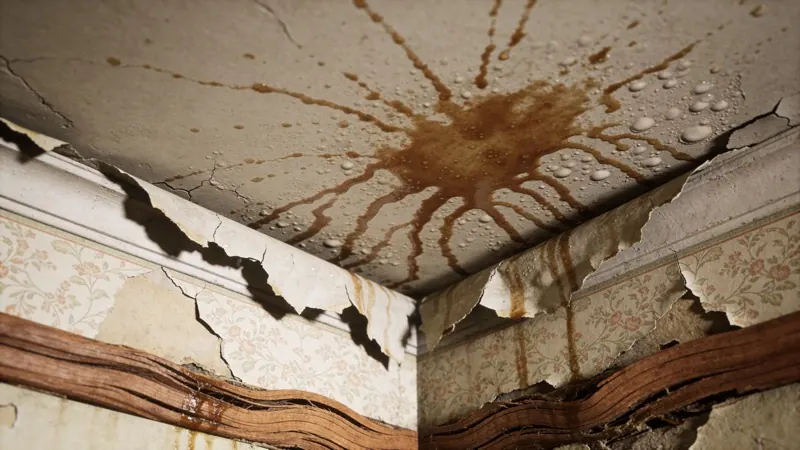
Water Damage Signs at a Glance
| Location | Key Signs | Urgency |
|---|---|---|
| Walls | Paint bubbling, staining, warped drywall, efflorescence | Moderate to High |
| Ceilings | Brown stains, sagging, peeling texture | High (collapse risk if sagging) |
| Floors | Cupping hardwood, loose tiles, damp carpet, warped laminate | Moderate to High |
| Hidden | Musty smell, rising utility bills, pest activity, sticky doors | Investigate promptly |
| Bathroom | Soft flooring near toilet, cracked caulk, damp vanity cabinet | High |
| Basement | Efflorescence, wall stains, standing water, sump pump issues | High |
Signs of Water Damage in Walls
Walls are where most hidden water damage lives, and they are also where the signs are easiest to miss if you don't know what to look for. Water inside a wall cavity can come from plumbing leaks, condensation on cold pipes, roof leaks that run down through the wall framing, or even exterior water intrusion during heavy rain. The wall surface is the last place moisture shows up because drywall holds water internally before it saturates through to the paint surface.
Paint bubbling, peeling, or blistering
This is one of the most reliable visual indicators. When moisture accumulates behind or inside drywall, it breaks the bond between the paint and the wall surface. You'll see small bubbles or blisters in the paint, typically starting near the bottom of the wall or near fixtures like sinks, toilets, and bathtubs.
The paint may peel in flakes or lift in sections. Latex paint is especially sensitive to moisture and shows these signs earlier than oil-based paint.
Don't confuse this with paint failure from age or poor adhesion. Water-related paint damage is localized. It appears in specific areas rather than uniformly across the wall. If you see paint bubbling near a bathroom, kitchen, or along an exterior wall, moisture is the likely cause.
Discoloration and staining
Water stains on walls appear as yellowish, brownish, or dark patches. They are caused by minerals and sediment in the water that remain after the moisture evaporates. The stain itself tells you water has reached the surface at some point.
Fresh stains may feel slightly damp to the touch. Old stains from resolved leaks feel dry but leave a permanent discoloration.
Pay close attention to the shape and location of stains. A stain that runs vertically from ceiling to floor suggests a leak traveling down inside the wall. A stain concentrated near the base of the wall suggests water wicking up from the floor or a low pipe leak. A stain that appears in a ring or halo pattern often indicates water pooling and then partially drying, which tells you the leak may be intermittent.
Warped or buckled drywall
Drywall that has absorbed significant water swells. You may notice sections of the wall that are no longer flat, bulging outward or appearing wavy. Press gently on the affected area. Wet drywall feels soft or spongy compared to dry drywall.
If it gives more than a fraction of an inch, there's moisture inside. Severely saturated drywall crumbles when pressed and may eventually fail structurally, sagging away from the studs.
Efflorescence on masonry or concrete walls
In basements with concrete or block walls, look for a white, chalky, crystalline deposit on the surface. This is efflorescence, and it forms when water passes through concrete or masonry, dissolving mineral salts and depositing them on the surface as the water evaporates. Efflorescence itself isn't harmful, but it's definitive proof that water is migrating through the wall. The moisture source could be groundwater pressure, poor exterior drainage, or a foundation crack.
Suspect Water Damage in Your Walls?
Our IICRC-certified technicians use thermal imaging to find moisture hidden behind walls and under floors.
📞 Call (844) 426-5801Signs of Water Damage in Ceilings
Ceiling water damage is almost always caused by something above: a leaking roof, a pipe or fixture on the floor above, an HVAC condensation line, or ice dam issues in cold climates. Because gravity pulls water down and ceilings are the horizontal surface below, they tend to show water damage symptoms faster than walls.
Stains and discoloration
Ceiling stains are the classic water damage indicator. Brown, yellow, or tan spots on a white ceiling are hard to miss once they appear. A stain that appears to grow over time indicates an active, ongoing leak. A stain with crisp edges that doesn't change usually indicates a past leak that has been resolved.
A homeowner in the Denver suburbs noticed a small yellowish spot on her living room ceiling, roughly the size of a dinner plate. She assumed it was from a one-time roof leak during a storm the month before. Over the next six weeks, the stain grew to about three feet across. When we inspected, we found a slow leak from a toilet wax ring seal on the second floor.
The wax ring had partially failed and every time the toilet was flushed, a small amount of water seeped around the base, through the subfloor, and dripped into the ceiling cavity below. The ceiling joist and a section of subfloor had been wet for over a month. Mold was growing on the top side of the ceiling drywall. The stain wasn't from a storm. It was from everyday toilet use.
Sagging or drooping
A ceiling that sags or droops is holding water. This is a safety concern. A saturated section of drywall can weigh hundreds of pounds and collapse without warning. If you see a ceiling bowing downward, don't stand under it.
If the sag is significant, meaning more than an inch of deflection, consider placing a bucket underneath, poking a small hole with a screwdriver to relieve the water pressure (stand to the side when you do this), and calling for professional help.
Sagging ceilings are a strong indicator of either a significant active leak or a large accumulation of water above the drywall. For detailed guidance on ceiling-specific water damage, including when ceilings are safe to repair versus when they need replacement, see our ceiling water damage page.
Peeling texture or tape
If your ceiling has a textured finish (popcorn, knockdown, or orange peel), moisture causes the texture to soften, bubble, or fall off in sections. Similarly, the paper tape on drywall seams may lift or bubble when the joint compound behind it gets wet. These are subtle signs that can precede more obvious damage like staining or sagging.
Signs of Water Damage in Floors
Floors are often the first materials to get wet and the last to fully dry. Because subfloor moisture is hidden beneath the finish flooring, damage can progress for weeks before surface symptoms appear.
Hardwood floor cupping, crowning, or buckling
When hardwood absorbs moisture from below, the bottom of each board expands faster than the top, causing the edges to rise higher than the center. This is called cupping, and it creates a washboard appearance. Crowning is the opposite, where the center of the board is higher than the edges, which sometimes happens when a cupped floor is sanded before the moisture issue is resolved. Buckling is the most severe: boards pull away from the subfloor entirely, creating bumps and ridges.
Any of these symptoms on hardwood flooring indicates moisture underneath that needs to be addressed. Don't sand or refinish cupped hardwood until the moisture source is identified and the subfloor is dry. Sanding a wet floor locks in the deformation and the boards will crown when they eventually dry. See our hardwood floor water damage guide for more detail on hardwood-specific issues.
Tile grout discoloration or loosening
Grout that darkens, develops mold along the lines, or begins to crack and crumble can indicate moisture beneath the tile. Tiles that sound hollow when tapped (compared to a solid sound on neighboring tiles) may have lost their adhesion due to water undermining the thinset mortar. Loose tiles in a bathroom or kitchen, particularly near the tub, shower, or dishwasher, are a frequent sign that water has been getting underneath for some time.
Carpet that stays damp or develops odor
Carpet is deceptive. The surface can feel dry while the padding underneath holds water for days. Signs of moisture under carpet include a persistent damp or musty smell, carpet that feels cooler in certain spots than others (moisture creates a cooling effect), and visible mold or mildew at the carpet edges near baseboards.
If you pull back a carpet corner and the padding is discolored, damp, or smells off, there's moisture in the subfloor.
Vinyl or laminate lifting, bubbling, or warping
Vinyl plank flooring and laminate are both susceptible to moisture underneath even though their surfaces are water-resistant. If you notice planks lifting at the seams, bubbles forming under sheet vinyl, or laminate boards swelling at the joints, water has reached the subfloor below. Laminate is especially vulnerable because its fiberboard core swells permanently when wet and can't be restored.
Hidden Signs of Water Damage Most People Miss
The most expensive water damage is the kind you don't see. These subtle indicators often go unnoticed for months, giving hidden moisture time to cause structural damage and grow mold colonies inside your home's envelope.
Musty or earthy smell
Your nose is one of the best water damage detectors you have. Mold and mildew produce microbial volatile organic compounds (MVOCs) that create a distinctive musty, earthy, damp smell. If you walk into a room or a specific area of your home and notice this smell persistently, there's almost certainly moisture and biological growth somewhere nearby.
The challenge is that people become desensitized to smells in their own home. You may not notice a gradual change. Ask a friend or neighbor to come in and tell you if they detect any unusual odors, especially in basements, closets, under sinks, and near bathrooms. A fresh nose detects what yours has adapted to.
Increased utility bills
A hidden water leak adds to your water bill. Even a slow drip from a pipe inside a wall can add 10 to 50 gallons per day to your consumption. If your water bill increases noticeably over a month or two without a corresponding increase in usage, check your water meter.
Turn off all faucets and appliances that use water, then watch the meter for ten minutes. If the meter dial is still moving, you have a leak somewhere.
Similarly, a home with hidden moisture puts extra strain on your HVAC system. The system works harder to dehumidify the air, which increases energy consumption. An unexplained jump in your electric or gas bill during a season when your usage should be consistent can indicate excess moisture in the building envelope.
Pest activity
Certain pests are attracted to moisture. Carpenter ants, termites, silverfish, and cockroaches all gravitate toward damp wood and wet environments. If you notice an increase in pest activity, particularly in areas near bathrooms, kitchens, basements, or crawl spaces, the underlying cause may be a moisture problem rather than a seasonal infestation. Address the moisture source and the pest problem often resolves itself.
Condensation on windows and pipes
Excessive condensation on interior window surfaces or on cold water pipes indicates high indoor humidity. Some condensation in bathrooms after showers is normal. But persistent condensation in living spaces, bedrooms, or basements suggests an ongoing moisture source somewhere in the home. The excess humidity is being generated by water evaporating from a hidden leak or saturated building materials.
Doors and windows that stick
Wood framing around doors and windows swells when it absorbs moisture. If a door or window that has always operated smoothly suddenly starts sticking, binding, or not latching properly, and you can rule out foundation settling and seasonal humidity swings, moisture in the surrounding framing could be the cause. This is especially telling when it happens near a known water source like a bathroom or kitchen, or on a wall that shares plumbing with another room.
Allergy symptoms that get worse indoors
Mold spores are a common allergen. If household members develop worsening respiratory symptoms, sneezing, coughing, itchy eyes, or sinus congestion that improves when they leave the house and worsens when they return, hidden mold growth from water damage could be the trigger. The CDC notes that exposure to damp indoor environments is associated with upper respiratory tract symptoms, coughing, and wheezing. Children, elderly individuals, and people with existing respiratory conditions are most sensitive.
A family in the Orlando area contacted us after their youngest child developed a persistent cough that three rounds of antibiotics could not resolve. The pediatrician suggested they check for mold in the home. We found a slow leak at a bathtub drain fitting on the second floor that had been dripping into the floor cavity for an estimated four to five months.
Mold covered the underside of the subfloor and the top of the ceiling drywall below. After mold remediation and repair, the child's symptoms resolved within two weeks. The parents had no idea water was leaking; the only sign was their daughter's health.
Noticing Hidden Signs of Water Damage?
Our certified team responds within 1 hour with thermal imaging and moisture meters.
📞 Call (844) 426-5801Room-by-Room: Where to Check for Water Damage
Some areas of your home are more prone to water damage than others. Here's where to look and what to look for in each high-risk area.
Bathroom
Bathrooms are the number one source of hidden water damage in homes. Every fixture is a potential leak point.
- Check around the base of the toilet. Discoloration or softness in the flooring around the toilet base indicates a failing wax ring seal.
- Look at the caulk around the tub and shower. Cracked, missing, or discolored caulk allows water behind the surround and into the wall cavity.
- Open the vanity cabinet and look at the underside of the sink and the drain connections. Slow drips leave mineral deposits and staining on pipes and the cabinet floor.
- Feel the wall behind the toilet and around the shower valve. Damp or cool spots indicate moisture inside the wall.
- Check the ceiling of the room below any second-floor bathroom.
Kitchen
- Pull out the kick plate under the cabinets and look at the subfloor. Water from dishwasher or sink leaks often pools here undetected.
- Check under the sink for dampness, staining, warped wood, or musty smell. Supply line connections and drain fittings are the most common leak points.
- Look behind the refrigerator. Ice maker supply lines are a notorious leak source, and the leak can run for months behind the fridge where you never look.
- Check the floor around the base of the dishwasher. Pull the dishwasher forward if possible and inspect the supply and drain hose connections.
Basement
- Look for efflorescence (white deposits) on concrete or block walls.
- Check the base of walls for water stains, especially after heavy rain.
- Inspect the area around the water heater. Tank corrosion and pressure relief valve drips are common.
- Look at the sump pit if you have one. Make sure the pump activates when water rises to the float level.
- Check for standing water or dampness in corners, especially corners near the foundation walls.
- Inspect the rim joist area (where the foundation meets the framing). This is a common entry point for exterior water.
For complete basement-specific guidance including foundation drainage and sump pump systems, see our basement flooding page.
Attic
- Look for daylight coming through the roof decking, which indicates missing or damaged shingles.
- Check for water stains on the underside of the roof sheathing, particularly around roof penetrations (vents, chimney flashing, skylights).
- Look for mold growth on rafters or sheathing. Attic mold often appears as dark staining on wood surfaces.
- Check insulation for compression or discoloration, which indicates it has gotten wet.
- Inspect around HVAC ductwork for condensation stains.
Laundry room
- Inspect washing machine supply hoses. Rubber hoses degrade over time and are the single most common cause of catastrophic household water damage. If your hoses are rubber, consider replacing them with braided stainless steel hoses.
- Check the drain hose connection. A loose or improperly positioned drain hose can allow water to backflow.
- Look at the floor behind and under the washing machine for staining or dampness.
- If the laundry is on a second floor, check the ceiling below for stains or drips.
When to Call a Professional for Water Damage Assessment
Not every sign of water damage means you need to call a restoration company. A small stain from a resolved one-time leak may need nothing more than a fresh coat of paint. But certain situations require professional assessment because the visible signs are just the surface of a larger problem.
Call immediately if you notice
- Active dripping or running water from a ceiling, wall, or floor with no obvious source. Water is traveling through the structure and the source may be far from where you see it.
- A sagging ceiling. This indicates pooled water above the drywall and presents a collapse risk. Don't wait to see if it resolves.
- Visible mold growth larger than a few square inches. Small spots of surface mold on bathroom caulk can be cleaned. Mold covering sections of drywall, ceiling, or structural materials means moisture has been present long enough for a colony to establish, and the extent is likely much larger than what you can see.
- Sewage odor or visible sewage. This is Category 3 water, a health hazard requiring professional handling.
- Flooring that's buckling, heaving, or separating. This indicates significant subfloor moisture that's actively damaging structural materials.
- Multiple signs appearing simultaneously. If you're seeing stains, smelling mold, and noticing warped baseboards all in the same area, you likely have an active, ongoing moisture problem that's progressing.
Schedule an assessment soon if you notice
- A musty smell that you can't locate after checking visible surfaces.
- A water stain that appears to be growing over days or weeks.
- A spike in your water bill with no obvious explanation.
- Worsening allergy or respiratory symptoms among household members.
- Paint peeling or bubbling in areas near plumbing.
- Persistent condensation on interior surfaces.
Our assessment process uses thermal imaging cameras that show temperature differentials in walls and ceilings, which indicate moisture. We also use pin and pinless moisture meters to measure moisture content in drywall, wood, and concrete without destructive testing. A typical assessment takes 30 to 45 minutes and gives you a complete picture of where moisture exists in your home and what needs to happen next. Call (844) 426-5801 to schedule.
How to Distinguish Water Damage from Other Issues
Some signs that look like water damage are actually caused by other problems. Knowing the difference saves you time and ensures you're solving the right issue.
Water stains versus nicotine or cooking stains
Nicotine and cooking grease create yellowish-brown discoloration on walls and ceilings that can resemble water stains. The difference is pattern and location. Nicotine stains are uniform, covering large areas evenly.
Water stains are localized, have defined edges, and often appear in rings or drip patterns. A water stain near a plumbing fixture or at a ceiling corner is almost certainly water. A uniform yellow tint across an entire room is more likely environmental.
Cracks from settling versus water damage
All homes settle over time, creating hairline cracks in drywall, particularly at window and door corners and along ceiling seams. These settling cracks are typically straight or diagonal and appear at stress points. Water damage cracks tend to be more irregular, are often accompanied by staining or discoloration, and may appear at non-stress locations like the middle of a wall section. If a crack has brown or yellow discoloration around it, moisture is involved.
Normal humidity versus hidden moisture
In humid climates like Houston, Miami, or Atlanta, some level of indoor humidity is normal, especially during summer months. The EPA recommends keeping indoor relative humidity between 30% and 50%. If your hygrometer consistently reads above 60% despite your HVAC running normally, and you have not introduced new moisture sources (aquarium, lots of houseplants, unusual cooking), hidden moisture in the building envelope may be the cause. A professional moisture inspection can determine whether structural moisture is driving the elevated humidity.
Seasonal Water Damage Warning Signs
Different seasons bring different water damage risks. Knowing what to watch for at different times of year helps you catch problems early.
| Season | Primary Risk | What to Check |
|---|---|---|
| Winter | Frozen/burst pipes | Reduced water flow, frost on pipes, banging sounds |
| Spring | Snowmelt and rain intrusion | Basement moisture, attic water marks from ice dams |
| Summer | HVAC condensation, storm damage | Drip pan overflow, wind-driven rain intrusion |
| Fall | Clogged gutters, foundation pooling | Exterior staining near gutters, basement dampness |
Winter: frozen pipe indicators
When temperatures drop below freezing, water inside pipes can freeze and expand, cracking the pipe. Signs that a pipe has frozen include reduced water flow or no flow from a faucet, frost visible on exposed pipes, and unusual sounds (banging, clanking) when you turn on the water. If a pipe has already burst, you may hear water running inside a wall or see water appearing at the base of a wall or from a ceiling. For frozen pipe specifics, see our burst pipe water damage page.
Spring: snowmelt and rain
Spring thaw in northern climates brings two risks: snowmelt finding its way into basements through foundation cracks, and roof ice dam damage becoming visible once the ice melts. Check your basement after spring rains and during snowmelt for new moisture or staining. Inspect your attic for water marks that may have appeared during winter ice dam events.
Summer: HVAC condensation and storm damage
Air conditioning systems produce condensation that drains through a condensate line. If that line clogs, water backs up and can overflow into the drip pan, then into the ceiling or wall cavity below. Check your HVAC drip pan monthly during cooling season. Clear the condensate drain annually.
After severe storms, inspect your attic and exterior walls for signs of wind-driven rain intrusion. See our roof leak water damage page for storm-related concerns.
Fall: gutter issues and pre-winter prep
Clogged gutters cause water to overflow and run down exterior walls, pooling at the foundation. Check for water staining on exterior siding near gutters, erosion or pooling at the base of exterior walls, and dampness in the basement along the foundation wall below the gutter overflow point. Clean gutters before winter to prevent ice dams from forming.
DIY Water Damage Inspection Checklist
Use this checklist to inspect your home for water damage indicators. Walk through your home once every few months and check each item. Early detection is the difference between a minor repair and a major restoration project.
Visual inspection
- Check all ceilings for stains, discoloration, or sagging
- Look at the base of every wall for paint bubbling, peeling, or staining
- Inspect all baseboards for warping, swelling, or pulling away from the wall
- Check flooring for cupping, buckling, loose tiles, or soft spots
- Look under every sink (kitchen, bathroom, laundry) for drips, staining, or dampness
- Inspect behind the refrigerator and around the water heater
- Check the attic for roof deck staining or wet insulation
- Examine basement walls for efflorescence, staining, or dampness
Smell inspection
- Open every closet and cabinet and sniff for musty odors
- Check the basement for earthy or damp smells
- Smell around bathroom and kitchen fixtures
- Check the area around the HVAC air handler for unusual odors
Functional checks
- Test all doors and windows for sticking or binding
- Run the water meter test (turn off all water, watch meter for movement)
- Check the sump pump by pouring water into the pit to confirm it activates
- Inspect washing machine hoses for bulging, cracking, or corrosion at the fittings
- Look at the water heater for rust at the base, corrosion on fittings, or dripping from the pressure relief valve
Frequently Asked Questions About Signs of Water Damage
The earliest signs are typically a musty smell in a localized area, paint bubbling or peeling near the base of a wall, and small water stains on ceilings or walls. Warping baseboards and doors that start sticking are also early indicators. These signs often appear weeks before more obvious damage like visible mold or structural deformation, which is why regular inspection of high-risk areas matters.
Look for paint bubbling, peeling, or discoloration on the wall surface. Press the wall gently; if it feels soft or spongy, there's moisture inside. Check for warped or swollen baseboards along the bottom of the wall. A persistent musty smell near the wall indicates mold growth from hidden moisture. For definitive answers, a moisture meter can measure moisture content through the drywall, and thermal imaging shows temperature patterns that reveal water inside wall cavities.
Water damage creates a musty, earthy, or damp smell similar to a wet basement or an old cellar. This odor comes from mold and mildew producing microbial volatile organic compounds as they feed on wet organic materials like drywall paper, wood, and carpet backing. The smell is usually strongest in enclosed areas like closets, cabinets, and wall cavities where air circulation is limited.
Yes. Slow leaks inside wall cavities, under floors, and in ceiling spaces can persist for months or even years without producing obvious surface symptoms. A pinhole leak in a copper pipe inside a wall can drip for months before enough moisture accumulates to stain through the paint or cause visible damage. This is why hidden water damage often results in extensive mold growth by the time it's discovered.
For carpet, pull back a corner at the tack strip and check the padding and subfloor for dampness or discoloration. For hardwood, look for cupping, crowning, or boards that feel springy underfoot. For tile, tap tiles and listen for hollow sounds compared to neighboring tiles. A pinless moisture meter can be placed on any floor surface to measure moisture content in the subfloor below without removing the finish flooring.
Old water damage stains are typically dry, have crisp defined edges, and are uniform in color. New or active water damage stains are damp to the touch, may have soft or fuzzy edges as moisture continues to spread, and the area around the stain may feel cool or wet. Active stains often grow larger over days or weeks, while old stains remain static. If you're unsure, mark the edge of the stain with a pencil and check it in a few days; if it has expanded, the leak is still active.
A small stain from a one-time incident that has been resolved, like a single rain leak that was repaired, typically doesn't require restoration beyond cosmetic repair. But a stain that's growing, recurring, or accompanied by a soft or sagging ceiling indicates an ongoing issue that needs professional attention. Even small stains deserve investigation to confirm the water source has been resolved and no hidden moisture remains in the ceiling cavity.
Our moisture assessment uses professional thermal imaging cameras and moisture meters and is provided as part of our damage evaluation. We identify where moisture exists, how far it has spread, and what materials are affected. If restoration is needed, we provide a detailed scope of work and cost estimate, and we can begin work the same day. Call (844) 426-5801 to schedule.
Yes. According to the CDC, prolonged exposure to damp indoor environments and mold growth is associated with upper respiratory symptoms, coughing, wheezing, and exacerbation of asthma. Certain mold species produce mycotoxins that can cause more serious health effects. Children, the elderly, and immunocompromised individuals are most at risk. If household members are experiencing unexplained respiratory issues, hidden water damage and mold growth should be investigated.
First, try to identify the water source. If it's an active leak, stop it by shutting off the water supply to the affected fixture or your main water shutoff. Document the damage with photos and video for insurance purposes. Then assess the extent: is it a small, localized issue you can handle, or does it show signs of being larger than it appears? For active leaks, growing stains, visible mold, or any situation where you can't identify or stop the source, call (844) 426-5801 for a professional assessment. Our team can evaluate the damage, identify the source, and recommend next steps within 60 minutes of your call.
Early Detection Saves Thousands: Don't Ignore the Signs
Water damage is a progressive problem. It starts small, a slow drip, a failed seal, a hairline crack, and it grows. The materials in your home, drywall, wood, carpet, insulation, absorb water quietly and hold it where you can't see it.
Mold begins growing in 24 to 48 hours. Structural framing begins to weaken. And by the time the signs become obvious enough that you can't miss them, the damage behind your walls and under your floors has had weeks or months to compound.
The homeowner who catches a small ceiling stain early and investigates it pays for a plumber and maybe a section of drywall. The homeowner who paints over it and waits six months pays for mold remediation, structural repair, and a full restoration project. We see this pattern every week.
Use the inspection checklist in this guide regularly. Walk through your home with fresh eyes. Check under sinks, behind appliances, along baseboards, and in your attic and basement.
Trust your nose. And when you find something that doesn't look right or doesn't smell right, don't assume it will resolve itself.
Call (844) 426-5801 any time you suspect water damage. Our IICRC-certified team provides a thorough moisture inspection using thermal imaging and professional moisture meters. We tell you exactly what's happening in your home, whether it needs professional intervention, and what it'll cost.
We respond within 60 minutes, 24/7, and we work with all major insurance companies with direct billing. The earlier you find it, the less it costs to fix.