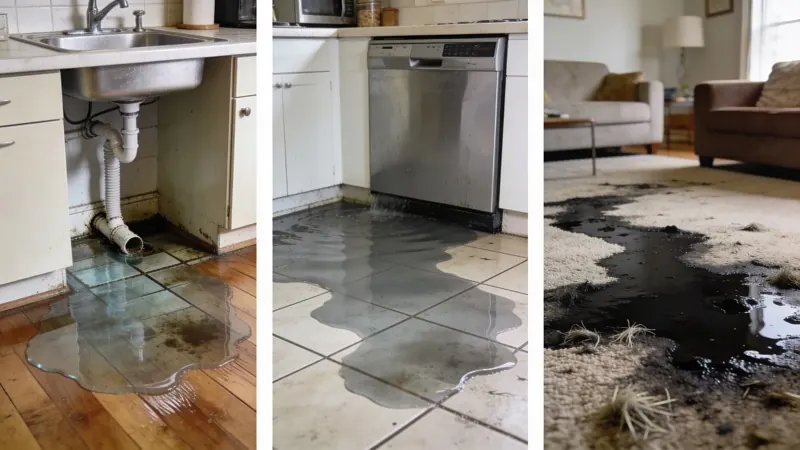
Water Damage Categories: The Three Types of Water
When a restoration technician walks into your home after a water event, the first thing they do isn't grab equipment. They classify the water. What kind of water caused the damage? How much material did it affect? Those two assessments, the water category and the damage class, determine everything that happens next: what equipment gets used, which materials can be saved and which have to go, what safety precautions the crew needs, and ultimately what the restoration costs.
The classification system comes from the IICRC (Institute of Inspection, Cleaning and Restoration Certification) and their ANSI/IICRC S500 Standard for Professional Water Damage Restoration. Every IICRC-certified technician in the country uses this system, and so does your insurance company when they evaluate your claim. Understanding these categories and classes gives you a real advantage because you'll know what to expect, what questions to ask, and whether the restoration company is following the right protocols for your situation.
If you're dealing with water damage right now and need an immediate classification and response plan, call (844) 426-5801. Our IICRC-certified crew arrives within 60 minutes, classifies the water, maps the moisture, and begins restoration based on exactly what your home needs.
The IICRC divides water into three categories based on contamination level. This isn't about how much water you have. It's about what's in the water. A Category 1 event with four inches of clean water on your floor is actually easier to restore than a Category 3 event with half an inch of sewage. Contamination drives the restoration approach.
| Factor | Category 1 (Clean) | Category 2 (Gray) | Category 3 (Black) |
|---|---|---|---|
| Health risk | None at time of event | Illness or discomfort | Serious illness or death |
| Common sources | Supply lines, water heater, faucets | Washing machine, dishwasher, toilet (urine only) | Sewage, flood water, toilet (fecal) |
| PPE required | Standard work gear | Gloves, eye protection | Full Tyvek suit, N95/P100 respirator, boots |
| Porous materials | Dry in place | Evaluate; padding replaced | All removed, no exceptions |
| Antimicrobial treatment | Preventive (optional) | Required on all surfaces | Required + HEPA air scrubbing |
| Typical cost (2-3 rooms) | $1,500-$5,000 | $3,500-$7,000 | $12,000-$20,000+ |
| Degrades to next level | 48 hours | 48-72 hours | N/A (highest level) |
Category 1 Water Damage: Clean Water
Category 1 water originates from a sanitary source and doesn't pose a health risk through contact, ingestion, or inhalation at the time of the event. This is the best-case scenario for water damage, if there's such a thing.
Common sources of Category 1 water
- Broken water supply lines to sinks, toilets, washing machines, or refrigerator ice makers
- Water heater tank failure (the water inside the tank is potable until it mixes with other contaminants)
- Rainwater entering through a clean roof leak, before contacting building materials like attic insulation or ceiling cavities
- Melting ice or snow entering through a door or window
- Faucet left running with the drain blocked
What Category 1 means for restoration
Category 1 is the most straightforward water to deal with. Because the water is clean, the focus is on extraction and drying rather than decontamination. Most building materials that absorb Category 1 water can be dried in place without removal, including drywall, carpet, hardwood flooring, and structural framing. Restoration crews don't need specialized PPE beyond standard work gear, and the antimicrobial treatment is preventive rather than reactive.
The cost difference is significant. Category 1 restoration for a typical two-to-three-room event runs $1,500 to $5,000. The same square footage with Category 3 water can run three to four times that because of demolition and decontamination requirements. For detailed cost breakdowns, see our water damage restoration cost guide.
The critical time factor
Here's what catches homeowners off guard: Category 1 water doesn't stay Category 1 forever. The IICRC S500 standard is clear on this. Clean water that sits for extended periods begins developing bacteria and other contaminants. Within 48 hours in a warm environment, Category 1 water can degrade to Category 2. After 72 hours, particularly in temperatures above 70 degrees, it can reach Category 3 status.
A restoration technician in our Phoenix crew responded to a call from a homeowner who had a supply line break to a second-floor bathroom. The water was running while the family was on a four-day weekend trip. By the time they returned, there was clean water from a supply line, textbook Category 1, but it had been sitting in carpet, drywall, and wall cavities for four days in a house with no air conditioning running.
The water had turned gray and smelled sour. Bacterial testing confirmed it had degraded to Category 2. Instead of drying the carpet and drywall in place, the crew had to remove the carpet, padding, and bottom 24 inches of drywall in every affected room. The delay turned a $3,200 restoration into an $8,700 restoration.
Time isn't on your side, even with clean water. If you have Category 1 water damage, the sooner you begin drying, the more materials you save and the lower your costs.
Category 2 Water Damage: Gray Water
Category 2 water, commonly called gray water, contains significant contamination that could cause illness or discomfort if contacted or consumed. It isn't as dangerous as Category 3, but it's not safe either. You shouldn't clean up Category 2 water without protective gloves, and porous materials that absorbed it need to be evaluated carefully.
Common sources of Category 2 water
- Washing machine discharge water (contains detergent, dirt, and body soil)
- Dishwasher discharge (food particles, grease, detergent)
- Toilet overflow with urine but no feces
- Sump pump failures where groundwater mixes with soil and sediment
- Aquarium leaks (fish waste, bacteria)
- Waterbed leaks (mildew and plasticizer chemicals over time)
- Category 1 water that has been sitting for 48 or more hours
What Category 2 means for restoration
Category 2 introduces a decontamination component to the restoration. Extraction and drying still happen, but now antimicrobial treatment is required on all affected surfaces, not just recommended. Porous materials present a judgment call.
Carpet that absorbed Category 2 water can sometimes be professionally cleaned and dried, but the padding underneath must be replaced because padding can't be effectively decontaminated. Drywall that absorbed Category 2 water depends on saturation level: minor wetting may be salvageable with antimicrobial treatment and drying, but significant saturation usually means removal.
The crew wears gloves and eye protection. The extracted water is handled as contaminated and can't be dumped down a standard drain in some jurisdictions. All surfaces that contacted the water get treated with antimicrobial agents after drying.
Gray water versus clean water: why it matters for your insurance claim
Your insurance adjuster cares about the water category because it directly affects the scope of work and cost. A Category 2 classification means more materials are replaced rather than dried in place, antimicrobial treatment is applied across all surfaces, and the overall labor hours increase. If you file an insurance claim, the water category is documented in the scope of loss and directly impacts your payout.
This is why proper classification matters. We've seen situations where a homeowner described their washing machine overflow as "just water" and the insurance company initially classified it as Category 1. But washing machine discharge is Category 2, which means carpet padding removal, antimicrobial treatment, and more extensive cleanup. Proper classification by a certified technician ensures your claim reflects the actual scope of work required.
Need Immediate Water Damage Assessment?
Our IICRC-certified technicians classify and document water damage for accurate insurance claims.
📞 Call (844) 426-5801Category 3 Water Damage: Black Water
Category 3 water is grossly contaminated. It contains pathogenic agents, meaning bacteria, viruses, and parasites that can cause serious illness or death. This is the most dangerous category and the most expensive to restore. There's no gray area with Category 3: if the water falls into this classification, specific protocols must be followed and certain materials must be removed without exception.
Common sources of Category 3 water
- Sewage backups through floor drains, toilets, or main sewer lines
- Flooding from rivers, streams, or storm surge (all outdoor floodwater is Category 3 regardless of how clean it appears)
- Toilet overflow with fecal matter
- Wind-driven rain from hurricanes or severe storms that mixes with outdoor contaminants
- Any standing water that has been stagnant long enough to support bacterial growth (Category 1 or 2 water that has degraded)
- Water that has contacted soil and ground-level contaminants
What Category 3 means for restoration
Category 3 restoration is fundamentally different from Category 1 or 2. The contamination level means all porous materials that contacted the water must be removed and discarded. No exceptions. That includes:
- All carpet and carpet padding
- Drywall, typically cut to at least 24 inches above the water line, though many restorers cut to 48 inches as an added safety margin
- All insulation in affected wall cavities
- Fabric-covered furniture, mattresses, and upholstered items
- Cardboard, paper goods, and other paper-based materials
- Particleboard and MDF cabinets or shelving that absorbed water
Hard, non-porous surfaces like tile, concrete, metal, and solid wood framing can be cleaned and decontaminated. But everything porous goes. The crew wears full PPE: Tyvek suits, N95 or P100 respirators, chemical-resistant gloves, and rubber boots.
HEPA air scrubbers run throughout the work area to capture airborne contaminants. After demolition, every remaining surface receives antimicrobial treatment, and the structure is dried with industrial equipment before any rebuild begins.
A family in the Houston area experienced a sewage backup through their main floor drain during a heavy rain event that overwhelmed the municipal sewer system. About an inch and a half of sewage water covered their finished basement, roughly 800 square feet. The water receded within a few hours and the homeowner, thinking the worst was over, cleaned the visible residue with a mop and bleach. He ran a fan for three days and assumed it was handled.
Six weeks later, his daughter developed persistent respiratory issues. An air quality test found elevated levels of Aspergillus and Stachybotrys spores. When we opened the walls, the insulation and the backside of the drywall were covered in mold growth from the contaminated water that had wicked up inside the wall cavities.
The restoration required removing all drywall in the basement to four feet high, all insulation, all carpet and padding, antimicrobial treatment of all framing and the concrete slab, HEPA air scrubbing, and complete rebuild. Total cost: $18,400. If the Category 3 protocols had been followed immediately after the backup, the cost would have been approximately $6,000 to $8,000, and nobody would have gotten sick.
Category 3 water is a health hazard. There's no DIY approach that's safe. If you have sewage in your home, flood water from outside, or contaminated water of any kind, call (844) 426-5801 immediately. Our sewage backup cleanup crews follow strict IICRC S500 Category 3 protocols.
Water Damage Classes: How Much Material Is Affected
While categories describe the water itself, classes describe the extent of the damage and the amount of drying effort required. The IICRC defines four classes based on how much water was absorbed by the materials in the affected area. This classification determines how much drying equipment your project needs and how long it takes.
| Factor | Class 1 | Class 2 | Class 3 | Class 4 |
|---|---|---|---|---|
| Scope | Part of one room | Full room or large area | Multiple rooms, water from above | Dense materials saturated |
| Typical area | ~50 sq ft | 200-400 sq ft | 400+ sq ft, multi-floor | Varies by material |
| Materials affected | Low-porosity surfaces | Carpet, pad, drywall to 24" | Ceilings, walls top-down, floors | Hardwood, concrete, plaster |
| Air movers needed | 1-2 | 3-6 | 6-12 | Specialty equipment |
| Dehumidifiers | 1 household/commercial | 1-2 commercial | 2-3 commercial + desiccant | Desiccant + heat systems |
| Drying time | 2-3 days | 3-5 days | 5-7+ days | 7-28 days |
| DIY feasible? | Possible with care | Not recommended | No | No |
| Estimated cost | $500-$1,500 | $2,500-$6,000 | $5,000-$12,000+ | Varies widely |
Class 1: Minimal Damage
Class 1 is the smallest and easiest water damage to restore. Only a portion of a single room is affected, and the water has absorbed into materials with low porosity or minimal absorption.
What Class 1 looks like
A supply line under a bathroom sink breaks and water pools on the tile floor, wetting the baseboard and the bottom few inches of drywall along one wall. The cabinet underneath the sink is wet. Maybe 50 square feet total is affected. The water didn't spread to adjacent rooms, didn't soak carpet, and didn't travel into the subfloor.
Equipment and timeline for Class 1
Class 1 damage typically requires minimal equipment: one to two air movers and one dehumidifier. Drying time is two to three days. Many Class 1 events are within the capability of a homeowner with a shop vac, a household dehumidifier, and fans, though professional drying is always faster and more thorough. For tips on handling this level of damage yourself, see our guide on how to dry out a water damaged home.
Insurance claims for Class 1 events are sometimes below the deductible. A small area with minimal material damage may cost $500 to $1,500 to restore professionally, which is close to or under many homeowners' deductibles. In those cases, some homeowners handle the drying themselves and save the claim for larger events.
Class 2: Significant Damage
Class 2 affects an entire room or a large area, with water absorbed into structural components and building materials. This is where professional drying equipment starts making a measurable difference over household tools.
What Class 2 looks like
A washing machine supply hose fails in a second-floor laundry room. Water floods the laundry room floor and seeps into the adjacent hallway. Carpet and carpet padding in both areas are saturated. Drywall along the walls has wicked moisture up to 24 inches. The subfloor is wet across the full affected area. Roughly 200 to 400 square feet of material is involved.
Equipment and timeline for Class 2
Class 2 damage requires more aggressive drying: three to six air movers, one to two commercial dehumidifiers, and possibly specialty equipment for wall cavity drying. Drying time runs three to five days with professional equipment. Without commercial equipment, this level of damage can take ten days to two weeks to dry, which pushes well into the mold growth window.
The key difference between Class 1 and Class 2 is the amount of porous material that absorbed water. In Class 2, the structural materials, drywall, carpet padding, subfloor, are holding significant moisture. This moisture doesn't evaporate from surface airflow alone. It requires the combination of high-velocity air movement and dehumidification that commercial equipment provides.
Class 3: Extensive Damage
Class 3 is the highest level of water absorption. Water has come from above, saturating ceilings, walls, insulation, carpet, subfloor, and structural members throughout the affected area.
What Class 3 looks like
A pipe bursts in the attic or second floor and water cascades down through the ceiling into the room below. The ceiling drywall is saturated and may be sagging or have already collapsed. Walls are wet from the top down. Insulation in the ceiling cavity is completely soaked, acting like a sponge that drips water for hours even after the source is stopped. The floor is flooded, carpet is saturated, and the subfloor may be taking water from above and below simultaneously.
Class 3 events almost always involve ceiling water damage and often affect multiple floors of the home. The volume of saturated material is high, and the water has reached every porous surface in the affected zone.
Equipment and timeline for Class 3
Class 3 requires the most equipment of any class: six to twelve air movers, two to three commercial dehumidifiers, possible desiccant dehumidifiers for ceiling cavities, and specialty equipment like injectidry systems for walls and ceiling assemblies. Saturated ceiling insulation almost always needs to be removed because it holds too much water to dry in place and its weight can cause ceiling collapse.
Drying time runs five to seven days or more. This is the class where we often see homeowners who attempted DIY drying and gave up after a week. The sheer volume of moisture in Class 3 events overwhelms residential equipment. A 50-pint household dehumidifier is removing six gallons of water per day. A commercial LGR unit removes 15 to 20 gallons. When you have hundreds of gallons absorbed into your building envelope, the math doesn't work without commercial equipment.
Class 4: Specialty Drying Situations
Class 4 isn't about the amount of water. It's about the types of materials that absorbed it. Class 4 applies when water has saturated materials with very low porosity or permeance, meaning materials that hold water tightly and release it very slowly: hardwood flooring, concrete, plaster, stone, brick, and certain engineered substrates.
What Class 4 looks like
A dishwasher leak saturates the hardwood kitchen floor. The boards are cupping and the subfloor underneath is holding moisture. Or a supply line failure floods a room with plaster walls (common in older homes), and the plaster has absorbed water deep into its mass. Or water saturates a concrete slab with no moisture barrier underneath.
The defining characteristic of Class 4 is that the wet materials resist giving up their moisture. Standard drying protocols, even with commercial air movers and dehumidifiers, aren't enough. The materials need additional drying methods to extract water that's physically trapped inside their structure.
Equipment and timeline for Class 4
Class 4 often requires specialty equipment beyond standard air movers and dehumidifiers. Floor mat drying systems sit on top of hardwood floors and apply heat and vacuum to pull moisture out of the wood. Desiccant dehumidifiers, which use chemical desiccant wheels rather than refrigerant coils, can achieve much lower humidity levels than standard LGR units and are more effective at pulling moisture from dense materials. Heat drying systems raise the temperature of the affected area to accelerate evaporation from concrete, plaster, and masonry.
Drying times for Class 4 situations are the longest of any class. Hardwood floors may take seven to fourteen days. Concrete slabs can take two to four weeks. Plaster walls can take ten or more days.
These timelines are with commercial equipment; without it, some Class 4 materials may not fully dry at all, or may take so long that mold growth is inevitable.
For a deep dive into the equipment, science, and monitoring involved in professional drying across all classes, see our structural drying page.
How Categories and Classes Work Together
Category and class are independent measurements. You can have any category with any class. A Category 1, Class 1 event, like a small clean-water leak in a single room, is the simplest and least expensive to restore. A Category 3, Class 3 event, like sewage backup that affects an entire floor with saturated walls and ceilings, is the most complex and expensive.
Here's how the combination plays out in practice with some real scenarios:
Category 1, Class 2
A toilet supply line breaks and floods the bathroom and hallway. The water is clean (Category 1) but it has saturated carpet, padding, and drywall across 300 square feet (Class 2). Restoration involves extraction, removal of carpet padding, flood cuts on drywall if necessary, and three to five days of drying. Estimated cost: $2,500 to $5,000. Materials can be dried in place where possible because the water is clean.
Category 2, Class 2
A dishwasher drain line backs up and the discharge water floods the kitchen and dining room. The water contains food particles and detergent (Category 2) and has saturated hardwood in the kitchen and carpet in the dining room (Class 2). Restoration involves extraction, carpet padding replacement, antimicrobial treatment on all surfaces, and four to six days of drying with possible floor mat systems for the hardwood. Estimated cost: $3,500 to $7,000.
Category 3, Class 3
A municipal sewer backup sends sewage into the finished basement. Water reaches 8 inches and contacts walls, carpet, furniture, and stored items across 600 square feet. The water is grossly contaminated (Category 3) and has saturated every porous material in the space (Class 3).
Restoration involves full PPE, removal of all carpet, padding, drywall to 48 inches, all insulation, and all porous contents. Remaining structural members receive antimicrobial treatment. Air scrubbing runs throughout. Drying takes five to seven days, followed by complete rebuild. Estimated cost: $12,000 to $20,000 or more.
Understanding this matrix helps you anticipate the scope of your restoration and have a more informed conversation with your restoration company and your insurance adjuster. If a company quotes you Category 1 pricing for a sewage event, or skips antimicrobial treatment on a Category 2 job, those are red flags.
Dealing With Water Damage Right Now?
Our IICRC-certified crew arrives within 60 minutes to classify, document, and begin restoration.
📞 Call (844) 426-5801Why Proper Classification Matters for Your Insurance Claim
Insurance adjusters use the IICRC category and class system to evaluate the scope of your water damage insurance claim. The classification directly determines:
- What materials are replaced versus dried. Category 3 means all porous materials are removed. Category 1 means most can be dried in place. This difference alone can swing a claim by thousands of dollars.
- What safety protocols are required. Category 3 requires PPE, air scrubbing, and biocide treatment. These are legitimate line items in the scope of work.
- How much equipment is needed and for how long. Class 3 requires more dehumidifiers and air movers than Class 1. Equipment rental is billed per day, so higher class means higher drying costs.
- Whether antimicrobial treatment is included. Category 2 and 3 require it. Category 1 may include it as a preventive measure but it's sometimes disputed by adjusters as unnecessary.
This is why having an IICRC-certified restoration company classify your water damage matters. A certified technician's classification carries weight with insurance companies because it follows the recognized industry standard. A homeowner saying "it was clean water" doesn't carry the same authority as a certified technician documenting "Category 1, supply line failure, confirmed via source inspection and water testing."
We've seen insurance companies try to downgrade a Category 2 event to Category 1 to reduce the payout. The proper documentation, including source identification, water testing when necessary, photographic evidence, and the technician's professional assessment, protects your claim. We handle this documentation as part of every restoration project. We bill your insurance directly and work with all major carriers.
Category Degradation: How Clean Water Becomes Dangerous
One of the most important concepts in water damage classification is degradation. Water doesn't stay at its initial category forever. The IICRC S500 standard describes specific conditions under which water degrades from one category to a higher (more contaminated) category.
Category 1 to Category 2
Clean water degrades to Category 2 when it sits long enough for microorganisms to develop, typically within 48 hours. Factors that speed degradation include warm temperatures (above 70 degrees), contact with organic materials (carpet, drywall, wood), poor ventilation, and the introduction of contaminants from the environment (dirt tracked through the area, pet activity).
Category 2 to Category 3
Gray water degrades to Category 3 within 48 to 72 hours as bacterial populations multiply. The EPA and CDC have documented that stagnant water in indoor environments rapidly develops pathogenic organisms, particularly when temperatures are above 68 degrees and organic nutrients are available.
What this means for homeowners
Category degradation is the single strongest argument for speed in water damage response. A pipe burst at 8 AM on Monday that gets professional attention by noon is a Category 1 event with relatively straightforward restoration. The same pipe burst discovered Thursday after a four-day vacation is now a Category 2 or Category 3 event requiring demolition, decontamination, and a restoration bill that could be two to three times higher.
According to the EPA, indoor environments with standing water or saturated materials above 60% relative humidity create conditions conducive to rapid microbial growth. The agency recommends professional remediation for any indoor water damage that isn't addressed within 24 to 48 hours. This is consistent with the IICRC's degradation timeline.
This is why we operate 24/7 with a 60-minute response guarantee. A 2 AM pipe burst needs response at 2 AM, not at 9 AM the next morning. Every hour of delay allows the water to degrade, the damage to spread, and the restoration scope to grow. Call (844) 426-5801 any time, any day.
How We Classify Water Damage on Every Job
When our crew arrives at your home, the classification process follows a specific protocol:
- Source identification. Where's the water coming from? A broken supply line means Category 1 starting point. A sewer drain means Category 3. A washing machine drain means Category 2. The source determines the initial category.
- Time assessment. How long has the water been in contact with materials? If a clean source has been sitting for more than 48 hours, we consider category degradation.
- Visual and olfactory inspection. Is the water clear, cloudy, or discolored? Is there an odor? These indicators help confirm or adjust the initial classification.
- Moisture mapping. Using thermal imaging cameras and moisture meters, we identify every area that water reached, including inside walls, under floors, and in ceiling cavities. This determines the class.
- Documentation. The category, class, source, affected materials, and affected area are all documented with photos, moisture readings, and written assessment. This becomes part of your insurance claim documentation.
- Protocol selection. Based on the category and class, the crew selects the appropriate extraction, drying, and decontamination protocols per IICRC S500 standards.
The entire classification takes about 20 to 30 minutes. By the time we start extraction, we know exactly what we're dealing with, what equipment the job needs, and what the restoration scope looks like. We communicate all of this to you in plain language so you understand what is happening in your home and why.
Frequently Asked Questions About Water Damage Categories
The IICRC defines three categories based on contamination. Category 1 is clean water from a sanitary source like a broken supply line. Category 2 is gray water containing contaminants that can cause discomfort or illness, like washing machine or dishwasher discharge. Category 3 is black water that's grossly contaminated with pathogenic organisms, like sewage or flood water. Each category requires different restoration protocols and safety measures.
Categories describe the contamination level of the water itself: how clean or how dangerous it is. Classes describe the extent of absorption into building materials: how much material got wet and how much drying effort is required. A restoration project has both a category (1, 2, or 3) and a class (1, 2, 3, or 4), and both factor into the restoration approach and cost.
Yes. Water categories degrade over time. Clean water (Category 1) sitting for 48 hours can develop enough bacteria to become Category 2. After 72 hours in warm conditions, it can degrade to Category 3. This is why fast response to any water damage is critical regardless of the initial water source.
Yes. According to the IICRC S500 standard, all water that enters a structure from ground level during natural flooding events is automatically classified as Category 3, regardless of how clean it appears. Flood water carries soil bacteria, agricultural runoff, sewage from overwhelmed systems, and other contaminants. See our flood damage restoration page for flood-specific guidance.
Class depends on how much material absorbed water. Class 1 affects a small area with low absorption. Class 2 affects a full room with carpet, pad, and walls absorbing water up to 24 inches. Class 3 involves water from above saturating ceilings, walls, and floors throughout the space. Class 4 involves dense materials like hardwood, concrete, or plaster that resist drying. A professional moisture assessment determines the class accurately.
The category affects the scope of work and total cost, which directly impacts your claim payout. Category 3 restoration costs significantly more than Category 1 because porous materials must be demolished rather than dried, and decontamination protocols are required. Your insurance policy covers the work required by the classification, which is why proper documentation by a certified technician matters.
An IICRC-certified water damage restoration technician makes the determination based on the water source, duration, visual inspection, and moisture mapping. This assessment follows the ANSI/IICRC S500 standard and is included in the documentation provided to your insurance company. Homeowner self-assessments don't carry the same weight with insurance adjusters.
The ANSI/IICRC S500 Standard and Reference Guide for Professional Water Damage Restoration is the industry-recognized standard that defines categories, classes, drying protocols, safety requirements, and documentation practices for water damage restoration. The standard is developed and maintained by the IICRC and is referenced by insurance companies, restoration companies, and regulatory agencies across the United States. All of our technicians are trained and certified to this standard.
Small Category 2 events can be managed with precautions: rubber gloves, boots, eye protection, and thorough disinfection of all surfaces after drying. Carpet padding must be replaced. However, if the affected area is large, if the water sat for more than a few hours, or if it reached inside walls or under cabinets where you can't access it, professional restoration is recommended. Category 3 water should never be handled without professional equipment and PPE.
Know Your Water, Protect Your Home
Understanding water damage categories and classes isn't just academic knowledge. It's the framework that determines how your home gets restored, what it costs, and whether the job is done right. Category tells you the contamination risk. Class tells you the drying scope.
Together, they drive every decision from equipment selection to material replacement to the final documentation that supports your insurance claim.
The most important takeaway from this guide is time. Water categories degrade. What starts as a straightforward Category 1 cleanup becomes a Category 2 decontamination job after 48 hours, and a Category 3 health hazard after 72. The sooner you respond, the lower the category stays, the more materials you save, and the lower the restoration costs.
If you have water damage in your home and you aren't sure what category or class you're dealing with, call (844) 426-5801. Our IICRC-certified crew arrives within 60 minutes, classifies the water, maps the moisture, and builds a restoration plan based on exactly what your home needs. We document everything for your insurance company and bill them directly.
Don't guess at the classification. A professional assessment takes 30 minutes and it can save you thousands in improper restoration or denied insurance claims.