Your dishwasher just dumped three inches of water across the kitchen floor. Or maybe you came home from work and found a puddle spreading from under the bathroom vanity. Now you're standing there with a mop in one hand and your phone in the other, trying to figure out whether you can handle this water damage cleanup yourself or whether you need to spend money on a professional crew.
Here's the truth that most restoration companies won't tell you: not every water damage situation needs a professional. Some of them you can handle yourself with the tools you already own, a weekend of work, and some basic knowledge. We're going to walk you through exactly how to make that call.
We're also going to be straight with you about when DIY water damage cleanup is a bad idea. After 15 years in this industry, we've seen what happens when homeowners underestimate a situation. A $500 problem turns into a $12,000 mold remediation project because someone assumed a box fan and an open window would do the job. We'd rather tell you the truth upfront than profit from a mistake you didn't need to make.
If you're reading this and your situation sounds bigger than what we describe in the DIY section below, or if you're not sure, call us at (844) 426-5801. We'll tell you honestly whether you need us. That's not a sales pitch. It's how we've built our reputation over 15 years and thousands of restoration jobs.
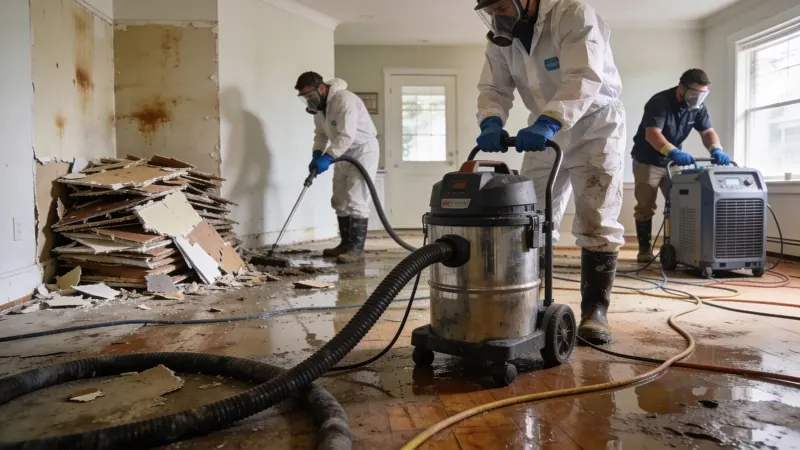
When DIY Water Damage Cleanup Is Perfectly Fine
Let's start with the good news. There are water damage scenarios where calling a professional restoration company would be overkill. If your situation checks all of the following boxes, you can probably handle it yourself:
- The water is clean. It came from a supply line, ice maker connection, sink overflow, or similar uncontaminated source (Category 1 water). If it came from a toilet with waste, washing machine drain, dishwasher, or any source that touched the ground outside, it's not clean water. The IICRC classifies these as Category 2 or Category 3 water, and they require different handling.
- The affected area is small. We're talking about a single room or a portion of a room. If water has spread to multiple rooms, gone through the floor to the level below, or traveled along baseboards into adjacent spaces, the scope is beyond typical DIY capability.
- You caught it quickly. If the water has been sitting for less than 24 hours and you're already working on cleanup, the risk of secondary damage is much lower. The 24-48 hour window is when mold spores start colonizing wet materials.
- The materials are simple. Tile, vinyl plank, laminate, concrete — materials that don't absorb water. Carpet is manageable if the pad isn't soaked through. Hardwood floors are a different story — read our guide on hardwood floor water damage before deciding to DIY.
- No drywall is involved. Or if it is, the water only reached the bottom few inches and hasn't wicked upward. Drywall acts like a sponge and travels upward through capillary action, sometimes 12 to 24 inches above the visible waterline.
DIY Water Damage Cleanup: Step-by-Step for Small Incidents
Your situation fits the criteria above. Here's exactly how to clean it up, step by step. This is the same basic approach our technicians use, scaled down for a small residential incident with household tools.
Step 1: Stop the water source
Before you clean up a single drop, make sure no more water is coming in. Turn off the supply valve behind the toilet, under the sink, or behind the appliance. If you can't find a local shutoff, turn off the main water supply to the house. Your main shutoff is usually in the basement, crawl space, garage, or near the street at the meter box. Turn it clockwise until it stops.
Step 2: Address electrical safety
If water is anywhere near electrical outlets, power strips, or appliances, go to your breaker panel and turn off the circuit for that area. Do not walk through standing water to reach the panel. Do not unplug anything that's sitting in water. If you can't safely reach the panel, call an electrician first. This isn't something to take chances with.
Step 3: Remove standing water
For small amounts (a puddle, a thin layer across a floor), towels and a mop work fine. For larger amounts, a wet/dry shop vacuum is your best friend. If you don't own one, this is a good time to buy one or rent one from a hardware store. A standard 6-gallon shop vac can handle most small residential water incidents.
For carpet, run the shop vac slowly over the surface in overlapping passes. You'll be surprised how much water comes out.
Step 4: Remove wet materials that won't dry
Carpet padding is the big one here. If the pad under your carpet got wet, pull the carpet back and remove the pad. Carpet pad is essentially a sponge — it holds water, it doesn't dry well with household equipment, and it becomes a mold breeding ground fast.
The carpet itself can often be saved if you get the pad out and dry the carpet within 24-48 hours. Carpet pad is cheap to replace, typically $3 to $8 per square yard.
Wet cardboard boxes, paper, fabric, and other porous items that sat in water should be removed from the area. Set them outside to dry if they are salvageable, or dispose of them if they aren't.
Step 5: Increase air circulation
Open windows if weather permits. Set up every fan you own and point them at the wet areas. A box fan is better than nothing, but a high-velocity floor fan (the kind that sits flat and blows upward at an angle) is significantly more effective.
If you have a dehumidifier, run it in the affected room with the door closed. A household dehumidifier pulls about 30 to 50 pints of moisture per day. It's not industrial-grade, but for a small area with clean water, it gets the job done.
Leave fans and the dehumidifier running 24/7 until everything is dry. This usually takes two to four days for a small incident. Empty the dehumidifier collection tank regularly, or run a hose to a drain.
Step 6: Clean and disinfect
Once surfaces are dry, clean everything the water touched with a mild detergent solution. For hard surfaces, a mix of dish soap and warm water works fine.
For an extra layer of protection, follow with a solution of one cup of household bleach per gallon of water. Wipe it on, let it sit for 10 minutes, then wipe it off. This isn't a substitute for professional antimicrobial treatment, but for Category 1 water on hard surfaces, it's adequate.
Do not use bleach on colored fabrics or finished wood. For carpet that got wet, rent a carpet cleaner or hire a carpet cleaning service after it dries. A professional carpet cleaning costs $100 to $250 for a single room and is worth every dollar.
Step 7: Monitor for the next two weeks
This is the step most people skip, and it's the most important. After you think everything is dry, keep checking the area daily for two weeks. You're looking for:
- Musty or earthy smell (mold starting to grow)
- Discoloration on walls or ceiling
- Paint bubbling or peeling
- Baseboards pulling away from the wall
- Carpet that still feels damp underfoot
- Any visible dark spots on surfaces
If you notice any of these, the water reached places you didn't dry. At that point, you should call a professional for a moisture assessment. The number is (844) 426-5801, and we can tell you within 30 minutes whether there's a hidden moisture problem.
Not Sure If It's a DIY Job?
Our team will assess the situation honestly and tell you whether you need professional help.
📞 Call (844) 426-5801What We Have Seen Go Wrong: Three Real Situations
These are real situations from our restoration work. Names and specific details are changed, but the scenarios and outcomes are accurate.
The laundry room that looked fine
A homeowner in Texas had a washing machine supply hose burst while she was at work. She came home to about two inches of water in the laundry room and the adjacent hallway. The water had been sitting for roughly six hours.
She mopped everything up, ran a fan for three days, and figured she had handled it. The tile floor dried quickly. Everything looked and smelled normal. Two months later, she noticed a faint musty smell in the hallway. Then the baseboards started to warp.
When we got there and opened the walls, we found extensive mold growth on the backside of the drywall and the bottom of the wall studs. The water had wicked up inside the wall cavities, and the tile floor had given her a false sense of security. The top of the tile was dry, but the water had traveled along the subfloor under the tile and into the wall plates on both sides of the hallway.
What started as a cleanup she could have managed for a few hundred dollars turned into a $9,500 mold remediation and drywall replacement project. The key mistake was not checking the wall cavities. Without a moisture meter, she had no way to know moisture was trapped behind seemingly dry surfaces.
The "small" bathroom leak
A couple in Colorado noticed a small puddle forming around the base of their toilet after flushing. They put towels down and called a plumber, who replaced the wax ring. Problem solved, or so they thought.
What they didn't realize was that the wax ring had been failing gradually for months. Water had been seeping around the toilet base in tiny amounts with every flush, soaking into the subfloor. By the time the visible puddle appeared, the plywood subfloor around the toilet had lost its structural integrity. Two weeks after the plumber visit, the floor started feeling spongy. A month later, the toilet rocked when you sat on it.
We removed the toilet and found the subfloor had deteriorated in a three-foot radius. There was black mold on the underside of the plywood and on the floor joists below. The total repair included subfloor replacement, joist treatment, mold remediation, new tile, and toilet reinstallation. The lesson here is that some water damage isn't a sudden event. It accumulates over time, and by the time you notice it, the damage has already spread beyond what you can see.
The DIY success story
Not every story is a cautionary tale. A homeowner in Ohio was filling his bathtub, got distracted by a phone call, and came back to find the tub overflowing. Clean water, maybe 20 minutes of overflow, contained entirely in the bathroom which had tile flooring and a proper threshold at the door.
He shut off the water, toweled up the standing water, ran his shop vac over the tile and grout, pointed a fan at the floor for 48 hours, and that was it. No hidden damage, no mold, no issues. The water was clean, the exposure time was short, the area was small, the flooring was non-porous, and the water didn't travel beyond the bathroom.
That's a textbook DIY water damage cleanup situation. He saved himself a service call and handled it correctly. The difference between this story and the other two comes down to the criteria we listed above: clean water, small area, caught quickly, simple materials.
The Risks of Getting DIY Water Damage Cleanup Wrong
We're not trying to scare you into calling us. We're telling you what we've seen happen hundreds of times when people underestimate water damage. The consequences of getting it wrong are real and expensive.
Hidden moisture leads to mold
This is the single biggest risk. Water travels through building materials in ways you can't see from the surface. It wicks up drywall. It flows along subfloor seams. It pools on vapor barriers inside wall cavities. According to the EPA, mold can begin growing on wet surfaces within 24 to 48 hours. Once established, mold doesn't go away when the area dries out. It goes dormant and reactivates when humidity rises. The only solution at that point is professional mold remediation, which is a different scope and cost than the original water damage.
Structural materials weaken
Plywood subfloor that stays wet too long delaminates. The layers separate and the structural integrity drops. OSB (oriented strand board) subfloor swells and never returns to its original dimensions once it absorbs significant moisture. Drywall that stays wet crumbles. None of these materials give you visible warning signs until the damage is well advanced.
Category escalation
Here's something most homeowners don't know: water categories change over time. Clean Category 1 water becomes Category 2 after sitting for 48 to 72 hours as bacteria multiply. Category 2 escalates to Category 3 with further time or contact with sewage and soil. The water you're mopping up on day one isn't the same water you'd be dealing with on day three — and that changes whether DIY cleanup is safe. See our water damage categories guide for the full breakdown of all three categories and what each one means for cleanup.
Insurance documentation gaps
If you handle the cleanup yourself and later discover hidden damage, your insurance claim becomes more complicated. Insurance adjusters want to see documentation of the original damage: photos, moisture readings, a professional scope of work. If you mopped it up and threw away the carpet pad without documenting anything, you have given your carrier grounds to question the extent of the original damage. This doesn't mean you should not DIY small incidents. It means you should photograph everything before, during, and after cleanup, even if you think you won't need it. For more on the insurance side of things, our insurance claim guide covers what adjusters look for.
What Professional Equipment Does That Your Household Tools Can't
This isn't about equipment snobbery. It's about physics. There's a measurable performance gap between household tools and professional restoration equipment, and understanding that gap helps you make a smart decision about when to call.
| Category | Household Tools | Professional Equipment |
|---|---|---|
| Extraction | Shop vac: 4-6 gallon capacity | Truck-mounted unit: hundreds of gallons, 10x suction |
| Drying (airflow) | Box fan: 1,000-1,500 CFM, unfocused | Air mover: 2,000-3,000 CFM, targeted |
| Dehumidification | Household unit: 30-50 pints/day | LGR dehumidifier: 120-160 pints/day |
| Detection | Visual inspection only | Moisture meters + thermal imaging cameras |
| Antimicrobial | Household bleach (surface only) | EPA-registered agents that penetrate porous materials |
Extraction: shop vac vs truck-mounted extractor
A typical household shop vac has 4 to 6 gallons of capacity and moderate suction. It works well for mopping up puddles. A truck-mounted extraction unit, which is what our crews bring to every job, generates dramatically higher suction and connects to a holding tank on the truck that handles hundreds of gallons. This matters because faster extraction means less time for water to soak into porous materials. On a job where water has spread through multiple rooms, a shop vac would take hours to accomplish what a truck-mounted unit does in 20 to 30 minutes.
For small, contained incidents, a shop vac is fine. For anything involving significant standing water across a large area, the extraction speed difference is the difference between saving materials and replacing them.
Drying: box fan vs industrial air movers and LGR dehumidifiers
A box fan moves air across a surface. An industrial air mover (sometimes called a turbo dryer) generates focused, high-velocity airflow that's specifically designed to pull moisture out of building materials and into the air. A single professional air mover moves roughly 2,000 to 3,000 cubic feet of air per minute (CFM). A box fan moves maybe 1,000 to 1,500 CFM in a much less focused pattern.
But the air mover is only half the equation. The moisture it pulls into the air needs to go somewhere, or you're just recycling humid air. That's where LGR (Low Grain Refrigerant) dehumidifiers come in. A household dehumidifier removes 30 to 50 pints of moisture per day. An LGR dehumidifier used in professional structural drying removes 15 to 20 gallons per day, which is 120 to 160 pints. That's three to five times the capacity.
For a small bathroom with tile floors, your box fan and household dehumidifier are adequate. For a living room with wet carpet, pad, and drywall, you need the airflow volume and dehumidification capacity that household equipment can't provide.
Detection: your eyes vs thermal imaging and moisture meters
This is where the real gap exists, and it's the reason most DIY cleanup failures happen. You can't see moisture inside a wall cavity. You can't feel dampness in a subfloor through carpet. You can't tell by looking at drywall whether the moisture content is 8% (dry and safe) or 22% (wet and growing mold).
Professional restoration technicians use two critical tools for detection:
Moisture meters measure the moisture content of building materials. A pin-type meter pushes two small probes into the material and measures electrical resistance between them. A pinless meter uses radio frequency to read moisture levels without penetrating the surface. We take readings on every surface in and around the affected area to create a moisture map showing exactly where water traveled.
Thermal imaging cameras detect temperature differences on surfaces. Wet areas show up cooler because of evaporative cooling. A thermal image can reveal water behind walls, under floors, and in ceilings without removing any material. We've found moisture 20 feet from the visible water source using thermal imaging, in areas the homeowner had no idea were wet.
You can buy a consumer moisture meter for $30 to $50 at a hardware store, and it's a worthwhile investment for any homeowner. It won't replace professional moisture mapping, but it can tell you whether your drywall or subfloor is wet when the surface looks dry. A thermal imaging camera, however, starts at $200 for a basic model and requires training to interpret correctly.
Antimicrobial treatment: bleach vs professional agents
Household bleach kills surface mold and bacteria on hard, non-porous surfaces. It doesn't penetrate porous materials like wood or drywall paper. Professional antimicrobial agents are formulated to penetrate into porous building materials and prevent microbial growth during the drying period. They are registered with the EPA for this specific use and are applied using sprayers that ensure consistent coverage.
For Category 1 water on hard surfaces, bleach is adequate. For anything involving porous materials or water categories above Category 1, professional antimicrobial treatment provides protection that household products can't match.
The Honest Threshold: When You Need to Call a Professional
After walking you through what you can handle yourself, here's the other side. Call a professional water damage cleanup company if any of the following apply:
- The water isn't clean. Sewage backup, washing machine drain water, dishwasher water with food waste, storm water, or any water that contacted the ground outside. Category 2 and 3 water carry bacteria, viruses, and pathogens requiring PPE and professional decontamination.
- Multiple rooms are affected. Once water crosses rooms, the scope expands beyond household equipment capability. Water in the hallway likely means wet wall cavities on both sides. Water on the second floor means potential ceiling damage below.
- The water sat for more than 24 hours. Even clean water becomes a mold risk after 24 hours on organic building materials. If you were away and came back to a wet house, professional moisture assessment and antimicrobial treatment are warranted.
- Drywall, insulation, or subfloor is saturated. These materials trap moisture internally and require professional drying equipment. A wet subfloor under tile can stay wet for weeks with only surface airflow.
- You smell mold or see any signs of growth. The situation has moved beyond water damage cleanup and into mold remediation territory. Don't disturb visible mold — scrubbing or spraying bleach releases spores into the air.
- You're not confident. A professional moisture assessment takes about 30 minutes and gives you a clear picture. Call (844) 426-5801 and we'll assess the situation honestly. If it's something you can handle yourself, we'll tell you that.
Hidden Damage That Homeowners Miss
In 15 years of water damage restoration, these are the hidden problems we find over and over. They are the reason that what looks like a minor incident sometimes turns out to be something bigger.
Water under tile and vinyl flooring
Tile and vinyl flooring can look perfectly dry on top while the subfloor underneath is soaked. Water gets under these materials through grout lines, seams, transitions, and edges where the flooring meets the wall. Because the flooring acts as a vapor barrier, the moisture underneath has nowhere to go.
We've pulled up tile in kitchens that looked completely dry and found standing water on the plywood beneath. Without lifting the flooring or using a moisture meter through the grout line, there's no way to know.
Moisture inside wall cavities
When water touches the bottom of a wall, it doesn't just wet the surface. It enters the wall cavity at the bottom plate (the horizontal piece of lumber the wall studs sit on). From there, it contacts insulation, the backside of drywall on both sides, and the studs themselves.
Fiberglass insulation holds water like a wick and keeps the wall cavity damp long after the floor is dry. This is the number one location where we find mold growth after water damage that was "cleaned up" by the homeowner.
Water migration along baseboards
Baseboards create a channel where water pools and travels laterally along the wall, often into adjacent rooms. We regularly find wet drywall and subfloor 10 to 15 feet from the original water source because water followed the baseboard gap.
If your water incident is near a wall, check the baseboards in both directions. Pull them away from the wall slightly and check behind them with a flashlight. If you see discoloration or dampness on the drywall behind the baseboard, the water traveled farther than you thought.
Cabinets and vanities
Kitchen and bathroom cabinets sit directly on the subfloor and against the wall. When water gets under or behind a cabinet, it gets trapped. The cabinet acts as an enclosure that blocks airflow and traps moisture against the wall and floor.
We find mold behind bathroom vanities and under kitchen cabinets more often than almost any other location. If water was near your cabinets, pull out the kick plate at the bottom and use a flashlight to look underneath. Check behind the cabinet where it meets the wall if you can access it.
Worried About Hidden Damage?
Our moisture assessment takes 30 minutes and tells you exactly what's going on behind the walls.
📞 Call (844) 426-5801Water Damage Cleanup Supplies: What to Have on Hand
If you're going the DIY route for a small water damage cleanup, here's what you need. Most of this is available at any hardware store.
Essential supplies:
- Wet/dry shop vacuum (6-gallon minimum)
- Heavy-duty rubber gloves
- Old towels and mops
- Box fans or floor fans (at least two)
- Household dehumidifier
- Plastic sheeting (6 mil) for isolating the area
- Trash bags for wet materials
- Bucket and mild detergent
- Household bleach for hard surface disinfection
- Utility knife for cutting carpet and pad
Recommended additions:
- Pin-type moisture meter ($30-$50 at hardware stores)
- N95 respirator mask (for dust from demolition, not for mold)
- Knee pads (you'll be on the floor a lot)
- Work gloves for handling wet carpet and pad
- Portable work light for seeing into dark spaces
- Pry bar for removing baseboards
A note about safety: if you're dealing with anything beyond clean Category 1 water, the PPE requirements go up significantly. Category 2 water requires rubber gloves, eye protection, and ideally rubber boots. Category 3 water (contaminated) requires a full Tyvek suit, rubber boots, rubber gloves, eye protection, and an N95 or P100 respirator at minimum. If you find yourself shopping for a Tyvek suit, that's a strong signal you should be calling a professional instead of handling it yourself.
How Long Does Water Damage Cleanup Take?
The timeline depends on the scope, but here are realistic expectations:
| Cleanup Type | Active Work | Drying Time | Total Timeline |
|---|---|---|---|
| Small DIY (single room, clean water, caught quickly) | 2-4 hours | 2-4 days | ~1 week including monitoring |
| Medium DIY (larger area, minor drywall exposure) | 4-8 hours | 3-5 days | ~1.5 weeks including monitoring |
| Professional (multiple rooms, complex materials) | 2-6 hours extraction | 3-5 days with daily monitoring | 4-7 days to dry verification |
For details on what the professional timeline looks like day by day, see our restoration timeline guide.
The drying time is the part you can't rush. Whether you're using household fans or industrial equipment, moisture has to leave the building materials at a rate those materials can handle. Consistent airflow and dehumidification are what matter.
Water Damage Cleanup Cost: DIY vs Professional
Since cost is one of the biggest factors in the DIY-vs-professional decision, here's a realistic breakdown. For comprehensive cost details including insurance coverage and what factors affect pricing, see our water damage repair cost guide.
DIY cleanup costs for a small incident:
| Item | Cost |
|---|---|
| Shop vac (if you don't own one) | $60-$120 |
| Replacement carpet pad | $3-$8 per sq. yard |
| Extra fans | $20-$40 each |
| Cleaning supplies | $20-$40 |
| Moisture meter (recommended) | $30-$50 |
| Carpet cleaning after drying | $100-$250 |
| Total DIY cost | $150-$500 |
Professional cleanup costs depend on the scope and vary significantly based on water category, affected area, materials involved, and your location. Our cost guide covers all variables in detail. The bottom line: if your situation genuinely qualifies as a DIY job, calling a professional will cost more. But if your situation is beyond DIY scope and you attempt it anyway, the cost of fixing the resulting damage is almost always higher than calling us in the first place.
Frequently Asked Questions About Water Damage Cleanup
Yes, if the water is clean (from a supply line or similar clean source), the affected area is small (one room or less), you caught it within 24 hours, and the materials are non-porous or minimally affected. Follow the step-by-step guide above. If any of those conditions aren't met, professional cleanup is the safer choice.
Mold spores can begin germinating on wet surfaces within 24 to 48 hours when temperatures are above 60 degrees Fahrenheit and relative humidity exceeds 60%. Visible mold colonies typically appear between 48 and 72 hours. This timeline is why fast water damage cleanup matters so much, whether DIY or professional.
Stop the water source. Turn off electricity to the affected area at the breaker panel. Remove valuables from the wet area. Start extracting standing water with towels or a shop vac. Photograph everything for insurance documentation. If the situation is beyond what you can manage, call (844) 426-5801 for professional help.
For small, clean-water incidents, yes. You can live in the home while drying is underway. For Category 2 or Category 3 water, areas with visible mold, or situations where large portions of the home are affected, you may need to relocate temporarily. Your homeowners insurance loss-of-use coverage may help with those costs.
A household dehumidifier helps with small incidents on hard surfaces. It removes moisture from the air, which accelerates surface drying. However, it can't pull moisture out of saturated drywall, subfloor, or wall cavities the way industrial LGR dehumidifiers combined with high-velocity air movers can. For anything beyond a small surface-level incident, household dehumidifiers are insufficient.
Look for paint bubbling, peeling, or discoloration on walls near the water source. Check for baseboards that are warping or pulling away. Feel the wall surface for soft or spongy spots. A musty smell near the wall is a strong indicator. For confirmation, use a pin-type moisture meter (available at hardware stores for $30-$50) to take readings at multiple heights on the wall.
Most standard homeowners policies cover sudden and accidental water damage, such as a burst pipe or appliance overflow. They typically don't cover gradual damage, flood water from natural events, or damage caused by deferred maintenance. Whether you clean it up yourself or hire professionals, document everything with photos and written records. For the full picture on coverage, see our water damage insurance claim guide.
Call a professional when the water is contaminated (not from a clean source), multiple rooms are affected, water has been sitting more than 24 hours, drywall or subfloor is saturated, you see or smell mold, or you're unsure about the scope. A professional moisture assessment gives you clarity. Call (844) 426-5801 for an honest evaluation.
Costs vary widely based on the water category, affected square footage, materials involved, and your geographic location. Small jobs may start in the low thousands; large multi-room jobs with contaminated water can run significantly higher. Most sudden water damage is covered by homeowners insurance. Our cost guide breaks down pricing by scenario.
Fans alone aren't enough for anything beyond a minor surface spill. Fans move air across surfaces, but they don't remove moisture from the air. Without a dehumidifier running simultaneously, you're evaporating water into the room air, raising humidity, and slowing the drying process. For any meaningful water damage, you need both airflow (fans) and moisture removal (dehumidifier) working together.
The Bottom Line on Water Damage Cleanup
Water damage cleanup isn't always a professional job. Small incidents with clean water, caught quickly, on simple materials can be handled by a homeowner with a shop vac, some fans, a dehumidifier, and the patience to let things dry for a few days. We've walked you through exactly how to do that.
But water is unpredictable. It travels where you don't expect it. It hides inside wall cavities, under flooring, and behind cabinets. It changes from clean to contaminated over time. And the consequences of incomplete drying — which include mold growth, structural deterioration, and material replacement — are significantly more expensive than the original cleanup.
Our recommendation: if your situation fits cleanly into the DIY criteria, handle it yourself using the steps in this guide. Document everything with photos just in case. And if anything feels off during or after the cleanup, don't push through and hope for the best. Call (844) 426-5801 for a moisture assessment. We'll check the areas you can't see and tell you honestly whether you're in the clear or whether there's a hidden problem that needs professional attention.
We answer 24 hours a day, 7 days a week. Our IICRC-certified technicians can be on-site within 60 minutes if you need us. And if you don't need us, we'll tell you that too.
That's how we've operated for 15 years. That's how we'll operate when you call.