The sump pump had been running since Tuesday. By Thursday morning, it quit. The homeowner in a suburb west of Indianapolis woke up to 8 inches of standing water in a finished basement — carpet, drywall, furniture, a home office, all of it submerged. It was the third week of April, peak spring thaw, and every restoration company within 50 miles was already booked solid.
That's the Midwest pattern. The water damage here isn't random — it follows a calendar. Spring thaw floods basements from March through May. Severe thunderstorms hammer the region from April through August. Tornado season peaks in May and June. And underneath all of it, the clay-heavy soil that defines so much of the Midwest creates drainage problems that make every water event worse.
If you own a home anywhere from Ohio to the Dakotas, from the Canadian border down through Missouri and Kansas, the water damage threats you face are driven by seasonal weather cycles, soil conditions, and infrastructure patterns that are distinct to this region. This page covers those region-specific risks — not the general restoration process or insurance claims procedure, which have their own dedicated pages. This is about what the Midwest does to homes that the rest of the country doesn't understand. Call (844) 426-5801 for 24/7 emergency response across the Midwest.
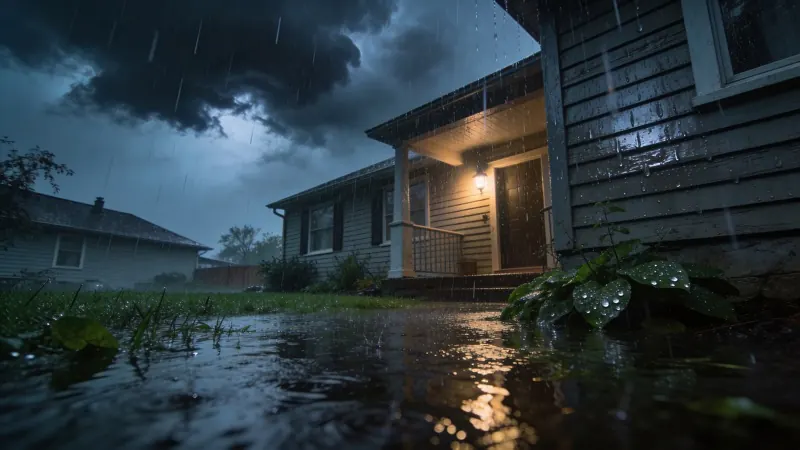
Spring Thaw: The Midwest's Most Predictable Water Damage Season
Every Midwest homeowner knows spring thaw is coming. The question is never "if" — it's "how bad." After months of snow accumulation from November through March, the melt arrives. And with it comes the water.
Why Spring Thaw Hits the Midwest So Hard
The Midwest accumulates substantial winter snowfall. Chicago averages around 36 inches per winter. Minneapolis averages over 50 inches. Des Moines, Omaha, Indianapolis — all accumulate significant snow cover that persists for months. When temperatures climb in March and April, that stored water has to go somewhere.
Frozen ground blocks absorption. By mid-winter, the soil in most of the upper Midwest is frozen 2-4 feet deep. When snow starts melting on the surface, the water can't penetrate the frozen ground beneath. It runs along the surface, pooling in low areas and against foundations. This is fundamentally different from rain that falls on unfrozen ground, which at least partially absorbs into the soil.
Rapid thaw events. The worst flooding happens when a warm front moves through and temperatures jump from the 20s to the 50s or 60s over 2-3 days. Instead of a gradual melt over weeks, the snow melts rapidly and overwhelms every drainage system — storm sewers, foundation drains, sump pits, ditches, and streams. Add rain on top of the melt, and the volume becomes staggering.
Flat terrain extends the problem. Much of the Midwest is flat to gently rolling terrain. Water doesn't move quickly to streams and rivers — it spreads, pools, and sits. In cities built on prairie land, stormwater systems handle normal rain events but get overwhelmed by the combined volume of snowmelt plus spring rain.
River flooding compounds local drainage. The Mississippi, Missouri, Illinois, Ohio, Wabash, and Des Moines rivers all swell during spring thaw. When rivers flood, the downstream drainage for the entire watershed backs up. Local storm sewers that discharge into swollen rivers can't drain, and the water backs up into neighborhoods, basements, and commercial properties.
The Midwest Basement Problem
Basements are nearly universal in Midwest construction. The deep frost line — 42-60 inches across most of the region — means foundations must extend well below grade, and once you have dug that deep, finishing the space as a basement is standard practice. That means the Midwest has more finished basements per capita than almost anywhere else in the country. And every spring, those basements are tested. For a full explanation of how hydrostatic pressure, cove joint seepage, and sump pump systems work, see our basement flooding page.
What makes the Midwest basement problem distinct is the combination of factors: post-war foundations (1950s-1960s) that are now 60-70 years old and cracking from decades of frost heaving, clay soils that hold water against those aging walls for days, and combined sewer systems in older cities that back up during heavy rain or snowmelt — sending Category 2 or 3 water up through basement floor drains.
Regional Story: The Finished Basement in Naperville
A family in Naperville, Illinois, had lived in their 1972 ranch for 12 years with a perfectly dry finished basement. They'd carpeted it, put up drywall, added a bathroom, and used it as a family room. In April, after a winter with above-average snowfall followed by a week of rain on top of the thaw, they woke up to water coming through the cove joint along the entire east wall.
The water was clear — groundwater, not sewage — but it was steady. By the time they called us, 3 inches of water covered approximately 600 square feet of finished basement.
Extraction took four hours. We removed the saturated carpet and pad, cut the drywall to 24 inches above the water line on the east and south walls (the water had spread along the slab), and set up six air movers and two LGR dehumidifiers. The concrete block foundation wall was saturated through — moisture meter readings on the interior face showed elevated levels that took five days of drying to bring down.
The key finding: the exterior drain tile system — original to the 1972 construction — had partially collapsed and was no longer routing groundwater to the sump pit. The sump pump was working fine, but it was only getting half the water it should have been receiving. The rest was building up against the foundation and pushing through the cove joint.
After the restoration, the homeowner had a waterproofing contractor install an interior French drain system and a new sump pump with battery backup. The next spring — with similar snowmelt conditions — the basement stayed dry. The restoration itself took eight days. The waterproofing fix took three days. Both were necessary. For more on basement flooding specifically, our dedicated page covers the full range of causes and prevention approaches.
Water in Your Midwest Basement?
Our IICRC-certified crews respond within 60 minutes, 24/7 across the Midwest.
📞 Call (844) 426-5801Sump Pump Dependence: The Midwest's Critical Weak Point
No other region of the country relies on sump pumps as heavily as the Midwest. The combination of high water tables, clay soil, and universal basements means that millions of Midwest homes have a sump pump running in the basement — sometimes for months at a stretch during spring thaw.
Why Sump Pumps Fail at the Worst Time
Continuous runtime. During spring thaw, sump pumps in the Midwest can run for weeks. A pump that cycles on and off every few minutes, 24 hours a day, for three weeks straight is under enormous stress. Motors burn out. Float switches wear. Impellers erode. The pump that tested fine in February may fail in late March when it's needed most.
Power outages during storms. The Midwest's severe thunderstorm season overlaps with spring thaw. A thunderstorm that knocks out power for 6-12 hours during peak groundwater season means the sump pump stops while the water keeps coming. Battery backup pumps provide a buffer, but most backup batteries last 5-8 hours under continuous pumping. Extended outages exhaust the backup.
Discharge line freezing. Sump pump discharge lines run from the pump to the outside of the house, where they expel water away from the foundation. In the Midwest, these lines can freeze during late-season cold snaps in March. When the discharge line freezes, the pump runs but the water has nowhere to go — it backs up into the sump pit and overflows into the basement.
Undersized pumps. Many Midwest homes still have the original builder-grade sump pump — typically a 1/3 HP submersible that was adequate when the house was new but can't keep up with increased groundwater flow from aging drain tile systems and changing weather patterns.
What We Recommend
After restoring thousands of sump-pump-failure basements across the Midwest, here's what actually works:
- Primary pump: 1/2 HP or larger, with a cast iron or stainless steel impeller (not thermoplastic)
- Battery backup pump: Separate pump with its own float switch and a marine deep-cycle battery rated for 8+ hours of continuous pumping
- Water-powered backup (optional): Uses municipal water pressure to run a backup pump — no battery needed, works as long as water pressure is available
- Alarm: A water alarm on the basement floor near the sump pit alerts you to rising water before it spreads
- Annual testing: Run the pump manually in February. Pour water into the pit and verify the float switch activates. Check the discharge line for obstructions.
Clay Soil: The Underground Problem That Drives Midwest Water Damage
Beneath the surface of much of the Midwest lies heavy clay soil — and that clay directly influences how water behaves around your foundation.
How Clay Soil Creates Water Damage
Clay doesn't drain. Sand and gravel allow water to pass through at rates measured in inches per hour. Clay soils have percolation rates measured in fractions of an inch per hour. When rain or snowmelt saturates the soil around a Midwest foundation, the clay holds that water instead of allowing it to drain away. The result is sustained hydrostatic pressure against the foundation that can last for days or weeks after the rain stops.
Clay expands and contracts. When clay absorbs water, it swells. When it dries, it shrinks and cracks. This expansion-contraction cycle pushes against foundation walls during wet periods and pulls away during dry periods, creating gaps that fill with water during the next wet cycle. Over decades, this cycle causes foundation walls to crack, bow, and eventually leak. Foundation wall bowing is a well-documented issue across the clay-heavy soils of Ohio, Indiana, Illinois, Iowa, and Missouri.
Backfill settlement creates water channels. When a home is built, the excavated trench around the foundation is backfilled with loose soil. Over years, that backfill settles and compacts, often creating a depression around the foundation perimeter. In clay soil areas, that depression channels surface water directly against the foundation wall — exactly where you don't want it.
Regional Soil Patterns
The glacial till zone (Ohio, Indiana, northern Illinois, Iowa, Minnesota): Dense glacial clay deposited by retreating ice sheets. This soil has very low permeability and creates persistent drainage problems around foundations. Many homes in this zone need exterior or interior drainage systems and sump pumps to manage the water table.
The loess zone (Missouri, Kansas, Nebraska, western Iowa): Wind-deposited silt soils that are fine-grained and cohesive. While not as impermeable as glacial clay, loess is susceptible to erosion and piping (internal erosion that creates underground channels). Loess foundations can experience settlement and cracking as the soil erodes around and beneath them.
The gumbo clay zone (parts of Missouri, Kansas, Oklahoma): Extremely expansive clay that swells dramatically when wet. Foundation movement in this zone is severe — we've seen foundation walls displaced 2-3 inches from their original position over years of wet-dry cycling. Water damage in homes on expansive clay often involves both the water intrusion and the structural movement caused by the soil.
Severe Thunderstorms and Tornado-Associated Water Damage
The Midwest sits in the heart of America's severe weather corridor. According to NOAA's Storm Prediction Center, the Midwest receives more severe thunderstorm and tornado activity than any other region. From April through August, the collision of warm, moist air from the Gulf of Mexico with cold air from the north produces thunderstorms that are among the most intense in the world.
How Midwest Storms Cause Water Damage
Rainfall intensity. Midwest thunderstorms can drop 2-4 inches of rain in one to two hours. This rainfall intensity overwhelms storm sewer systems that were designed for more moderate precipitation events. The result is urban flash flooding that puts water into basements, lower-level apartments, and commercial properties through every available entry point — floor drains, window wells, foundation cracks, and the cove joint.
Hail damage to roofs. The Midwest's hail corridor — running from South Dakota through Texas — produces large hail events that damage roofing materials. A severe hail event can compromise an entire neighborhood's roofs simultaneously, and the water damage from subsequent rains through those compromised roofs can be extensive. We've responded to neighborhoods in the Kansas City, Omaha, and Denver metro areas where every home on the block needed roof-related water damage restoration after a hail event.
Wind damage and water intrusion. Straight-line winds from derecho events and severe thunderstorms can exceed 80 mph. These winds damage roofs, siding, and windows, creating openings for subsequent rain entry. The August 2020 derecho that swept across Iowa — with winds exceeding 100 mph in some locations — caused widespread structural damage that led to months of water damage restoration work as rain entered through compromised building envelopes.
Tornado-Associated Water Damage
Tornadoes themselves cause wind and structural damage, but the water damage that follows a tornado is often what drives the restoration scope:
Rain after the tornado. Tornado-damaged structures with missing roofs, walls, or windows are exposed to subsequent rainfall — which often comes from the same storm system that produced the tornado. Hours of rain falling into a structure with no roof causes saturation damage to every interior surface.
Fire sprinkler and pipe damage. In commercial and multi-family properties, tornado wind can shear fire sprinkler mains and plumbing risers. A broken fire sprinkler main can dump hundreds of gallons per minute into a building — far more water than the tornado's rain would cause.
Flooding from storm drainage failure. The same storm system that produces a tornado typically drops heavy rain across a wide area. Storm drainage systems fail, creeks and rivers flood, and properties that survived the tornado's wind may still flood from the associated rainfall.
Regional Story: The Derecho Aftermath in Cedar Rapids
We were part of the restoration response after a severe derecho hit Iowa. In one Cedar Rapids neighborhood, a family's home had sustained moderate wind damage — several sections of vinyl siding ripped off, two windows broken, and approximately 30% of the roof shingles stripped. The structural damage from the wind was repairable.
But the rain that fell in the 48 hours after the derecho entered through every opening the wind had created. By the time the homeowner could get a tarp on the roof (tarps were in short supply across the entire region), the master bedroom, hallway, and an upstairs bathroom had taken direct rainfall. Water had saturated the attic insulation, soaked through the ceiling drywall, and collected on the second floor before draining down through the first-floor ceiling below.
The restoration required:
- Complete removal of attic insulation over the affected area (blown-in fiberglass, all saturated)
- Removal of ceiling drywall in four rooms across two floors
- Mold treatment on the roof deck and ceiling joists — the 48-hour exposure in warm, humid August conditions had initiated mold growth
- Seven days of structural drying with heavy equipment
- Rebuild of all removed drywall, retexturing, and painting
The wind damage was a 2-day repair. The water damage restoration took 12 days. That ratio — water damage from storm exposure exceeding the direct storm damage — is something we see consistently in the Midwest after severe weather events.
Lake Effect and Great Lakes Regional Water Damage
The Great Lakes states — Michigan, Wisconsin, northern Illinois, northern Indiana, Ohio, and western New York — deal with an additional weather phenomenon that the rest of the Midwest doesn't: lake effect precipitation.
How Lake Effect Events Create Water Damage
Extreme localized snowfall. Lake effect snow bands can dump 2-4 feet of snow on a narrow geographic band while areas just 20 miles away get nothing. This hyperlocal heavy snowfall creates concentrated melt and concentrated basement flooding during spring thaw. Communities downwind of the Great Lakes — the "snow belts" of western Michigan, northeastern Ohio, and western New York — deal with snow loads that rival or exceed northern New England.
Lake effect rain in fall. Before the lakes freeze, late fall cold fronts can produce lake effect rain bands. These events dump heavy, localized rain on communities along the lakeshores. The combination of fall leaf debris clogging gutters and heavy localized rainfall creates conditions for roof overflow, foundation flooding, and window well intrusion.
Coastal erosion and flooding. Great Lakes water levels fluctuate on multi-year cycles. During high-water periods, shoreline communities experience erosion, wave damage, and flooding of lakefront properties. High Great Lakes water levels in recent years have caused foundation damage, crawl space flooding, and structural undermining in shoreline communities across Michigan, Wisconsin, and Ohio.
Regional Considerations
Michigan: Lake effect snow on the western side of the state (Grand Rapids, Kalamazoo, Muskegon) creates heavy snow loads and concentrated spring flooding. The state's high water table in many areas makes basement water intrusion a near-universal concern. Sandy soils in some areas drain well but provide less foundation support.
Wisconsin and Minnesota: Among the coldest areas in the lower 48. Frozen pipe risk extends from November through March. Spring thaw is often rapid and severe because of the deep snow accumulation. Many older homes in Milwaukee and Minneapolis have limestone block foundations that are more porous than poured concrete.
Ohio and Indiana: Glacial clay soils dominate. Basement flooding from hydrostatic pressure is endemic during spring. Many older homes in the Cleveland, Columbus, Cincinnati, and Indianapolis metro areas have foundation drainage systems that are 50+ years old and failing.
Illinois: Chicago's combined sewer system is notorious for backing up during heavy rain events. Basement flooding from sewer backup is one of the most common restoration calls in the Chicago metro area. The city has invested heavily in the TARP (Tunnel and Reservoir Plan) deep tunnel system to address combined sewer overflow, but heavy rain events still overwhelm the system regularly.
Midwest Seasonal Water Damage Calendar
Understanding the Midwest's seasonal patterns helps homeowners prepare for the most likely threats in each period:
Winter (December-February)
- Frozen pipes — especially in homes with plumbing in exterior walls, unheated garages, or crawl spaces
- Ice dams — particularly on homes with poor attic insulation (common in 1950s-1970s construction)
- Sump pump discharge line freezing — the discharge line to the outside freezes, pump backs up
- Weight loads from snow — flat or low-slope roofs on commercial buildings and additions can accumulate snow loads that cause structural stress and potential roof failure
Spring (March-May)
- Spring thaw basement flooding — the biggest single driver of water damage calls across the Midwest
- Sump pump failure — from continuous runtime, power outages, or mechanical wear
- River flooding — Mississippi, Missouri, Ohio, and tributaries swelling with snowmelt and spring rain
- Foundation crack leaking — hydrostatic pressure finds every weakness in aging foundations
- Severe thunderstorms begin — April and May bring the first heavy storms with flash flooding potential
Summer (June-August)
- Severe thunderstorms and flash flooding — peak season for intense rainfall events
- Tornado-associated water damage — the water damage after a tornado often exceeds the wind damage
- Hail damage to roofs — creating entry points for subsequent rain
- AC condensation — HVAC condensation lines clog or malfunction, dripping water onto ceilings and into walls
- Sewer backup during heavy rain — combined sewer systems in older cities overflow during downpours
Fall (September-November)
- Late-season thunderstorms — September can still produce severe weather
- Gutter and downspout clogging from leaves — water overflows against the foundation
- Sump pump maintenance window — ideal time to service, test, and replace before winter
- Pre-freeze pipe preparation — insulate exposed pipes, service outdoor faucets, winterize sprinkler systems
- Lake effect precipitation begins — Great Lakes communities start getting localized heavy rain and early snow
The American Red Cross provides regional preparedness guides for Midwest severe weather, including tornado safety and flood preparation checklists. Reviewing these before each season helps homeowners prepare for the specific threats their area faces.
Midwest Water Damage Risk by State: Regional Comparison
| State | Top Water Damage Threat | Soil Type | Avg. Annual Snowfall | Sump Pump Dependency | Typical Restoration Timeline |
|---|---|---|---|---|---|
| Ohio | Basement flooding (hydrostatic pressure) | Glacial clay | 28-100" (varies by region) | Very High | 5-8 days |
| Indiana | Spring thaw + clay soil drainage | Glacial clay | 22-40" | Very High | 5-7 days |
| Illinois | Sewer backup (Chicago metro) | Glacial clay | 30-38" | Very High | 4-7 days |
| Michigan | Lake effect snow + spring melt | Sandy/clay mix | 40-180" (lake effect zones) | High | 5-9 days |
| Wisconsin | Frozen pipes + rapid spring thaw | Glacial clay | 40-60" | High | 5-8 days |
| Minnesota | Deep freeze pipe bursts + spring floods | Glacial clay | 50-70" | Very High | 6-10 days |
| Iowa | River flooding + tornado damage | Loess/clay | 30-40" | High | 5-8 days |
| Missouri | Expansive clay + flash flooding | Gumbo clay/loess | 18-30" | Moderate-High | 4-7 days |
| Kansas | Tornado water damage + hail roof damage | Expansive clay | 15-25" | Moderate | 4-8 days |
| Nebraska | Hail roof damage + river flooding | Loess/clay | 25-35" | Moderate | 4-7 days |
Timelines reflect typical residential restoration. Commercial projects and tornado-related damage may take significantly longer.
Midwest Insurance Considerations
For the complete insurance claims process, see our water damage insurance claim guide. Here are the Midwest-specific factors:
Sewer Backup Coverage
Standard homeowners policies in the Midwest DON'T automatically cover sewer backup or sump pump failure. You need a separate endorsement — typically called a "water backup and sump discharge or overflow" endorsement. In the Midwest, where these events are extremely common, many carriers offer this endorsement for $50-$150 per year. Coverage limits are typically $5,000-$25,000.
If you have a Midwest basement — and you almost certainly do — this endorsement isn't optional. It's essential. Check your policy today. If you don't have it, call your agent and add it.
Flood Insurance for River Communities
Communities along the Mississippi, Missouri, Ohio, Des Moines, Illinois, and other major rivers often fall within FEMA Special Flood Hazard Areas. Standard homeowners insurance doesn't cover flooding from rising rivers. Homeowners in these areas need NFIP or private flood insurance.
But flood risk in the Midwest isn't limited to river communities. Flash flooding from thunderstorms can put water into homes nowhere near a river. If the water enters your home from an external source (overland flow, street flooding), your homeowners policy likely won't cover it. Urban flash flooding is a growing problem in Midwest cities, and many homeowners don't realize they lack coverage until after the event.
Hail and Wind Deductibles
Some Midwest insurance policies — particularly in hail-prone states like Kansas, Nebraska, Iowa, and the Dakotas — include separate wind/hail deductibles. Like windstorm deductibles in the Southeast, these may be percentage-based rather than flat-dollar. A 1% wind/hail deductible on a $350,000 home means $3,500 out of pocket for storm damage.
When to Call for Water Damage Restoration in the Midwest
Midwest homeowners should act quickly on these region-specific situations:
- Sump pump running continuously for more than 48 hours — The pump is under extreme stress. Have a backup ready and call us if the pump sounds labored or the cycling frequency changes.
- Water seeping at the cove joint during spring — This indicates groundwater pressure against your foundation. Even a slow seep during thaw season can escalate rapidly if conditions intensify.
- Any water in the basement after a thunderstorm — Whether from sewer backup, floor drain, window well, or foundation crack, post-storm basement water needs professional assessment to determine the water category and appropriate restoration approach.
- After any hail event that damaged your roof — Even if you don't see interior water damage yet, compromised shingles will leak during the next rain. Get the roof inspected and address any interior moisture before mold begins.
- Standing water around your foundation that doesn't drain within 24 hours — In clay soil, this water is pressing against your foundation and will find a way in. Address the drainage, not just the symptoms.
Our Midwest crews are positioned in Chicago, Indianapolis, Columbus, Minneapolis, Kansas City, and across the region. We respond within 60 minutes, 24/7. Call (844) 426-5801 any time.
24/7 Midwest Emergency Response
IICRC-certified crews across Ohio, Indiana, Illinois, Michigan, Minnesota, and more.
📞 Call (844) 426-5801Frequently Asked Questions About Water Damage Restoration in the Midwest
The combination of months of accumulated snow melting over frozen ground that can't absorb the water, rising water tables that increase hydrostatic pressure against foundation walls, and clay soils that hold water rather than draining it creates the conditions for seasonal basement flooding. Add aging foundation drainage systems and sump pump fatigue from continuous operation, and spring basement flooding becomes the Midwest's most common water damage event.
Standard homeowners policies DON'T cover sump pump failure or sewer backup. You need a separate endorsement, typically called water backup and sump discharge coverage. In the Midwest, this endorsement usually costs $50-$150 per year and provides $5,000-$25,000 in coverage. Given the frequency of sump pump failures during spring thaw, this endorsement is considered essential for Midwest homeowners.
Clay soil has very low permeability — it holds water rather than allowing it to drain. When clay soil around a Midwest foundation becomes saturated from rain or snowmelt, it holds that water against the foundation for days or weeks, creating sustained hydrostatic pressure that pushes water through cracks and joints. Clay also expands when wet and contracts when dry, causing foundation movement and cracking over decades.
Most Midwest homes with active groundwater need at least a 1/2 HP primary sump pump with a cast iron or stainless steel impeller. Add a battery backup pump rated for 8+ hours of continuous operation. If your pump runs frequently during spring thaw, consider a 3/4 HP primary pump. Homes in areas with high water tables or clay soils may benefit from a water-powered backup system for extended power outages.
Tornadoes damage roofs, walls, and windows, exposing interiors to the heavy rain that typically accompanies the same storm system. Hours of rain falling into a building with missing roof sections saturates everything inside. In commercial and multi-family buildings, tornadoes can also shear fire sprinkler mains and plumbing risers, dumping hundreds of gallons per minute. The water damage restoration scope after a tornado frequently exceeds the direct wind damage repair.
The cove joint is where the basement wall meets the floor slab. In poured concrete basements — standard in Midwest construction — this joint is a natural seam. When hydrostatic pressure from saturated soil pushes groundwater against the foundation, the cove joint is the path of least resistance. Seepage along the cove joint is the single most common basement water entry point in the Midwest, especially during spring thaw.
Yes. Sewer backup water is Category 2 or Category 3 contaminated water containing bacteria, viruses, and other pathogens. All porous materials contacted by sewer water — carpet, pad, drywall, upholstered furniture — must be removed and discarded, not dried. Professional restoration with contaminated water protocols, PPE, and antimicrobial treatment is required. For more detail, see our sewage backup cleanup page.
Lake effect precipitation creates hyperlocal heavy snowfall and rainfall downwind of the Great Lakes. Communities in the snow belts of western Michigan, northeastern Ohio, and western New York receive concentrated precipitation that can be dramatically higher than areas just 20 miles away. This concentrated snowfall creates concentrated spring melt and basement flooding. Lake effect rain in fall, combined with leaf-clogged gutters, causes roof overflow and foundation flooding.
Test your sump pump in February — before the thaw begins. Pour water into the sump pit until the float switch activates and verify the pump runs and discharges properly. Check the discharge line for ice blockages. Test the battery backup separately. If the pump is more than 7-10 years old, replace it proactively — a failed pump during peak spring thaw causes thousands of dollars in damage.
Protect Your Midwest Home — Call Now
The Midwest's water damage threats follow a calendar you can predict but not prevent. Spring thaw, severe storms, clay soil, aging foundations — they all work together to put water where it doesn't belong. The finished basement that makes Midwest living comfortable in every other season becomes a liability during the weeks when groundwater rises and storms roll through.
Our IICRC-certified crews are positioned across the Midwest — Chicago, Indianapolis, Columbus, Minneapolis, Kansas City, St. Louis, and more. We understand the region-specific challenges: clay soil drainage, sump pump systems, aging foundations, and the severe storm damage that comes with living in Tornado Alley. We respond within 60 minutes, 24/7, every day of the year.
For details on our water damage restoration process, visit our main service page. For cost information, see our water damage repair cost guide. And for insurance help — including whether your sewer backup endorsement covers your situation — our insurance claim guide walks through it.
Water in your Midwest basement right now? Call (844) 426-5801. We're on the way.