The crew was already staged in Orlando when the outer bands of the storm started dropping rain on the Florida peninsula. Within 12 hours, we were responding to calls across central Florida — homes with water pouring through compromised roof shingles, apartments where wind had driven rain through sliding glass door tracks, and neighborhoods where the storm surge pushed brackish water into ground-floor units.
That was one storm during one hurricane season. The Southeast deals with this pattern every single year from June through November, and the water damage risks don't stop when hurricane season ends. High humidity, crawl space construction, tropical downpours, and the region's climate combine to make the Southeast one of the most challenging areas in the country for water damage — and especially for what comes after: mold.
This page covers the region-specific water damage threats facing homeowners from Virginia through Florida and west to Louisiana. If you need details about the restoration process itself or how to file your insurance claim, those dedicated pages cover the general information. Here, we focus on what makes the Southeast different — and why water damage restoration in this region demands a different approach. Call (844) 426-5801 for 24/7 emergency response anywhere in the Southeast.
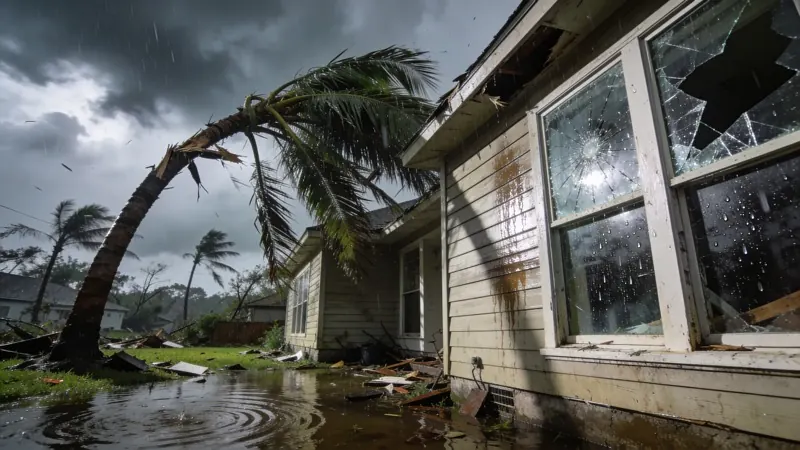
Hurricane Season: The Southeast's Annual Water Damage Cycle
The Atlantic hurricane season runs from June 1 through November 30, but the peak of the season — when the strongest and most frequent storms develop — falls between mid-August and mid-October. According to NOAA's National Hurricane Center, the Atlantic basin has been in an active hurricane cycle, and the Southeast coastline from Texas to the Carolinas bears the brunt.
How Hurricanes Cause Water Damage
Hurricanes damage homes through multiple water pathways simultaneously, and understanding each one matters for both the restoration approach and insurance coverage:
Wind-driven rain. Even a Category 1 hurricane with sustained winds of 74-95 mph drives rain horizontally into building envelopes with force that far exceeds what normal rainstorms produce. Rain enters through compromised shingles, around window frames, through soffit vents, and through any gap in the building envelope that wind can exploit. We've seen water penetrate stucco walls, vinyl siding joints, and around garage door seals during hurricanes — entry points that stay dry in normal storms.
Roof damage and subsequent water entry. Wind removes shingles, tears off ridge caps, lifts flashing, and in severe storms, removes entire roof sections. Once the roof is compromised, every subsequent inch of rain enters the structure directly. A typical hurricane can drop 6-12 inches of rain over 12-24 hours. On a 2,000-square-foot roof, that's roughly 7,500 to 15,000 gallons of water — and if even a small section of roof is missing, a meaningful fraction of that enters the attic and living space.
Storm surge. Coastal communities face storm surge — ocean water pushed inland by the hurricane's winds and pressure. Storm surge is the deadliest aspect of hurricanes and often the most damaging to structures. Surge flooding is always Category 3 contaminated water, saturated with saltwater, sewage, chemicals, and debris. Properties that take storm surge typically require extensive demolition of all porous materials from the floor up to the high-water mark plus an additional 12-24 inches.
Inland flooding from rainfall. Hurricanes don't have to be coastal events to cause water damage. The remnants of tropical systems routinely dump 5-15 inches of rain on inland communities across the Carolinas, Georgia, Tennessee, and Alabama. The remnants of several major hurricanes have caused catastrophic inland flooding hundreds of miles from the coast.
Seasonal Preparation Matters
In 15 years of responding to hurricane-related water damage across the Southeast, we've observed a consistent pattern: homeowners who prepared before the storm have significantly less damage than those who didn't. Preparation doesn't prevent a hurricane, but it reduces the water damage when one arrives.
Before hurricane season (May-June):
- Inspect roof shingles, flashing, and ridge caps. Replace anything loose, cracked, or missing.
- Clear gutters and downspouts completely. Blocked gutters overflow against the fascia during heavy rain.
- Check window and door seals. Replace deteriorated caulk and weatherstripping.
- Test sump pumps and battery backup systems.
- Know your insurance coverage — review your policy, check whether you have windstorm and flood coverage, and understand your deductibles.
When a storm is forecast (48-72 hours before):
- Install hurricane shutters or plywood over windows.
- Move outdoor furniture, potted plants, and debris away from the structure.
- Document your home's current condition with photos and video — this is your pre-storm baseline for insurance.
- Sandbag low-entry points if surge or flooding is expected.
- Charge devices, fill bathtubs with water, and prepare for extended power outages.
Regional Story: The Jacksonville Townhome After a Tropical Storm
A homeowner in a Jacksonville, Florida, townhome community called us 36 hours after a tropical storm passed through. She'd noticed water stains spreading across her second-floor ceiling and assumed it was a roof leak. When our crew arrived and inspected, the roof was intact.
The water was entering through the stucco wall on the windward side of the building. The storm's sustained winds had driven rain into a hairline crack in the stucco where it met a window frame. The crack had been there for years — invisible during normal rain. But 8 hours of 50+ mph wind-driven rain had pushed water through that crack, into the wall cavity, and down to the second-floor ceiling below.
The wall cavity had been wet for almost two full days before anyone noticed. When we opened the wall with a controlled demolition cut, we found saturated insulation and the beginning of microbial growth on the studs — not full mold colonization yet, but early growth consistent with 36-48 hours of continuous moisture.
We removed the wet insulation, treated the studs with antimicrobial agent, set up wall cavity drying with injectidry panels, and monitored moisture for five days. The stucco crack was repaired by a mason after the wall dried. Total restoration took seven days.
The homeowner's HO-3 policy covered the interior damage as wind-driven rain. This is a common Southeast scenario — minor exterior imperfections that cause zero problems until a tropical system exposes them.
Hurricane Damage? Call Now.
Our crews pre-stage before major storms and respond within 60 minutes across the Southeast.
📞 Call (844) 426-5801High Humidity and the Southeast's Year-Round Mold Problem
Ask any Southeast homeowner about mold and you'll get a knowing look. The Southeast's subtropical climate — with average relative humidity levels of 70-90% during summer months — creates conditions where mold doesn't just grow after water damage events. It grows opportunistically, year-round, in any space where moisture isn't actively controlled.
Why Southeast Humidity Accelerates Mold After Water Damage
When water damage occurs in the Southeast, the clock to mold growth ticks faster than it does in drier climates:
| Factor | Southeast | Southwest | Midwest | Northwest |
|---|---|---|---|---|
| Summer indoor humidity (no AC) | 65-80% | 10-30% | 40-60% | 50-70% |
| Mold colonization window | 24-48 hrs | 48-72 hrs | 36-60 hrs | 36-60 hrs |
| Typical wall cavity dry time | 5-7 days | 2-3 days | 3-4 days | 4-5 days |
| Year-round mold risk | High | Low | Moderate | Moderate |
Ambient humidity is already near the threshold. Mold requires relative humidity above approximately 60% to grow actively. In Phoenix, indoor humidity might be 20-30% — well below that threshold. In Atlanta, Miami, or Charleston during summer, indoor humidity without air conditioning can sit at 65-80%. That means the building materials in a Southeast home are already closer to the moisture content where mold thrives, and any additional moisture from water damage pushes them past the tipping point quickly.
Outdoor conditions fight the drying process. Structural drying relies on dehumidification — removing moisture from building materials by lowering the humidity of the surrounding air. In the Southeast, the outdoor air we're exhausting dehumidified air into is itself very humid. This means our drying equipment works harder and longer in the Southeast than it does in arid or temperate climates. A wall cavity that takes three days to dry in Denver might take five in Savannah.
AC systems mask moisture problems. Southeast homes run air conditioning 8-10 months per year. AC cools and dehumidifies indoor air, which is great — but it also creates a comfort zone where homeowners don't notice gradual moisture buildup in areas the AC doesn't reach: crawl spaces, attic spaces, closets against exterior walls, and areas behind furniture.
Seasonal transitions are dangerous. Spring and fall — when homeowners open windows and turn off AC — are peak mold growth seasons in the Southeast. Warm, humid outdoor air enters the home, hits cooler surfaces (especially in basements or on concrete slab floors), and condensation forms. That condensation feeds mold growth on surfaces that might have been borderline all year.
Mold Species Common to the Southeast
Because of the consistently warm, humid conditions, the Southeast sees certain mold species more frequently than other regions:
- Aspergillus — The most common indoor mold in the Southeast. Found on walls, in HVAC systems, and in attic spaces. Some species produce mycotoxins.
- Cladosporium — Thrives in warm, humid conditions. Common on bathroom surfaces, in crawl spaces, and on window sills where condensation collects.
- Stachybotrys (often called "black mold") — Requires sustained moisture. After water damage in the Southeast, the continuous humidity makes Stachybotrys colonization more likely than in drier climates where materials might dry out before colonization occurs.
- Chaetomium — Found in water-damaged drywall and wood. Common in Southeast homes after roof leaks or crawl space moisture intrusion.
For the full breakdown of mold species, health effects, and remediation approaches, see our mold remediation page. The point here is that the Southeast's climate makes every mold scenario more aggressive and more time-sensitive.
Crawl Space Moisture: The Southeast's Hidden Water Damage Problem
The Southeast has a much higher percentage of homes built on crawl space foundations than most other regions. This construction method — where the first floor sits above an open space between the ground and the subfloor — creates a persistent moisture problem that's specific to the Southeast's climate.
Why Crawl Spaces Are a Problem in the Southeast
Moisture migrates from the ground. In the Southeast's humid climate, soil moisture evaporates continuously into the crawl space. Without a vapor barrier, a standard 1,500-square-foot crawl space can release several gallons of water vapor per day into the space below the house. That moisture wicks into floor joists, subfloor sheathing, and insulation.
Ventilated crawl spaces make it worse. For decades, building codes required crawl space vents — the logic being that ventilation would remove moisture. In the Southeast, the opposite happens. Warm, humid outdoor air enters the crawl space through vents, hits the cooler surfaces of the foundation walls and subfloor, and condensation forms. The crawl space gets wetter, not drier.
Standing water after storms. During heavy rain events — which the Southeast experiences frequently — stormwater can pool in crawl spaces with poor drainage. Standing water in a crawl space may not be visible to the homeowner for weeks or months. By the time the musty smell or buckled floors alert them to the problem, mold is well established on the floor joists and subfloor above.
What We Find in Southeast Crawl Spaces
In our experience restoring water damage in Southeast homes, crawl space inspections reveal:
- Floor joist moisture content readings of 20-28% (16% or below is the target for mold prevention)
- Active mold colonies on the underside of subfloor sheathing, especially on OSB (oriented strand board) which is highly susceptible to moisture damage
- Saturated or sagging insulation that has fallen from between joists
- Standing water from either groundwater intrusion or plumbing leaks above
- Rusted HVAC ductwork and deteriorated duct insulation
- Wood damage from a combination of moisture and termite activity
Regional Story: The Charleston Crawl Space
A homeowner in a 1960s ranch-style home outside Charleston, South Carolina, called us about a musty smell that had been getting worse over several months. The hardwood floors in the living room were starting to cup — the edges of individual boards curling upward — which she attributed to aging floors.
When we accessed the crawl space, we found the source of both problems. The crawl space had no vapor barrier on the ground, the foundation vents were wide open, and the floor joists were visibly wet. Moisture meter readings on the joists ranged from 22% to 31% — well above the mold threshold.
Mold was actively growing on the underside of the subfloor across approximately 400 square feet. The hardwood floor cupping was caused by moisture migrating upward through the subfloor from the wet crawl space below.
Restoration involved:
- Installing a sealed crawl space vapor barrier (20-mil polyethylene) over the entire ground surface
- Closing the foundation vents
- Installing a commercial dehumidifier in the crawl space to maintain humidity below 55%
- Treating mold on floor joists and subfloor with antimicrobial agents and HEPA vacuuming
- Drying the structural components to below 16% moisture content over six days
- The hardwood floors eventually flattened once the moisture source was eliminated — no floor replacement needed
This isn't a water damage "event" in the traditional sense. It's a chronic moisture condition that the Southeast's climate creates in crawl space homes. But the mold remediation and structural drying work is the same as what we'd do after a pipe burst — the difference is the source of the moisture.
Termite Damage and Water Damage: The Southeast's Destructive Combination
This one is specific to the Southeast and worth discussing because we encounter it frequently. The region's warm, humid climate supports aggressive termite populations — particularly Eastern subterranean termites and Formosan termites. Termites and water damage interact in ways that compound the destruction:
How They Connect
Moisture attracts termites. Subterranean termites need moisture to survive. A home with water-damaged wood — whether from a plumbing leak, roof leak, or crawl space moisture — is significantly more attractive to termites than a dry home. The water damage creates the conditions termites need.
Termite damage compromises structural integrity before water damage occurs. Termites hollow out framing members — floor joists, studs, sill plates — from the inside, leaving the outer shell intact. When water damage occurs in a structure that already has termite damage, the compromised framing members absorb water differently, dry unevenly, and may lose structural capacity under the combined stress.
Southeast restoration crews encounter both regularly. In our restoration work across Florida, Georgia, the Carolinas, and the Gulf Coast states, we find termite damage during approximately one out of every four water damage restoration jobs where we open walls or access crawl spaces. The homeowner often had no idea termites were present until we exposed the framing during water damage demolition.
What This Means for Restoration
When we encounter termite damage during a water damage restoration job, we document it thoroughly and notify the homeowner. Termite treatment itself is handled by a licensed pest control company — that's not our scope. But the structural damage left by termites affects our restoration approach:
- Compromised framing may need to be sistered (reinforced) or replaced rather than simply dried
- Moisture readings in termite-damaged wood may not be reliable because the wood density is inconsistent
- Mold remediation in termite-damaged areas requires more careful handling because the wood is fragile
This combination problem is one of the reasons why water damage restoration in the Southeast sometimes runs longer and costs more than the same scope of damage in other regions. The pre-existing termite damage that the water damage reveals adds scope to the project.
Southeast Water Damage? Time Is Critical.
In the Southeast's humidity, mold can colonize within 24 hours. Our IICRC-certified crews respond in 60 minutes.
📞 Call (844) 426-5801Regional Storm Patterns Across the Southeast
The Southeast isn't monolithic. Different sub-regions face different dominant water damage threats:
| Sub-Region | Primary Threat | Peak Risk Season | Typical Drying Time | Common Construction |
|---|---|---|---|---|
| Coastal Florida | Hurricane wind/surge | Aug-Oct | 5-7 days | Concrete block (CBS) |
| Gulf Coast | Storm surge flooding | Jun-Nov | 5-7 days | Elevated piers/pilings |
| Carolinas & Virginia | Inland rain from hurricane remnants | Jun-Nov | 4-6 days | Crawl space & slab mix |
| GA, AL, TN, MS | Flash floods & tornadoes | Mar-Jun | 4-6 days | Crawl space, clay soil |
Coastal Florida (Miami, Fort Lauderdale, Tampa, Jacksonville)
- Primary threat: Hurricane and tropical storm wind damage with water intrusion, storm surge in coastal communities
- Secondary threat: Summer afternoon thunderstorms that drop 2-4 inches of rain in 30 minutes, overwhelming flat-terrain drainage systems
- Seasonal pattern: Peak hurricane risk August through October. Afternoon thunderstorm season June through September. King tides in fall can cause coastal flooding independent of storms.
- Construction note: Many Florida homes are concrete block construction (CBS), which handles water differently than wood frame. Block walls don't rot, but they absorb and hold moisture in ways that drive interior mold growth if not dried properly.
Gulf Coast (New Orleans, Mobile, Biloxi, Pensacola)
- Primary threat: Hurricane storm surge and wind damage. The Gulf Coast's low elevation and shallow continental shelf amplify storm surge — Hurricane Katrina's surge reached 28 feet in parts of Mississippi.
- Secondary threat: Tropical moisture and Gulf moisture creating intense rainfall events year-round.
- Seasonal pattern: Hurricane season June through November. Heavy rain events possible year-round due to proximity to Gulf moisture.
- Construction note: Many Gulf Coast homes are elevated on piers or pilings — a construction response to flood risk. Water damage in elevated homes often concentrates in the floor system and subfloor rather than walls.
Carolinas and Virginia (Charlotte, Raleigh, Charleston, Richmond, Virginia Beach)
- Primary threat: Hurricane remnants that dump heavy inland rain. The Carolinas frequently see tropical systems that stall or slow down over the region, producing extended rainfall events.
- Secondary threat: Severe thunderstorms and flash flooding in the Piedmont and mountain regions during spring and summer.
- Seasonal pattern: Hurricane risk June through November. Spring severe weather March through May. Occasional winter ice storms that cause pipe bursts and roof ice damage.
- Construction note: Mixed construction — crawl space foundations common in rural and suburban areas, slab-on-grade in newer developments. Older homes in cities like Charleston and Savannah have unique historic construction with its own restoration challenges.
Georgia, Alabama, Tennessee, Mississippi (Atlanta, Nashville, Birmingham, Memphis)
- Primary threat: Severe thunderstorms producing flash flooding and tornado-associated water damage. The Southeast tornado corridor runs through these states.
- Secondary threat: Hurricane remnants moving inland. Extended high humidity creating chronic moisture problems.
- Seasonal pattern: Severe thunderstorm season March through June. Tropical moisture events July through October. Humidity is essentially year-round.
- Construction note: Crawl space construction widespread. Clay soils in parts of Georgia and Alabama create drainage problems similar to what the Midwest experiences.
Southeast-Specific Insurance Considerations
Insurance in the Southeast involves complexities that don't exist in other parts of the country. For the complete claims guide, see our insurance claim page. Here are the region-specific factors:
| Coverage Type | What It Covers | Typical Limit | Southeast-Specific Notes |
|---|---|---|---|
| Homeowners (HO-3) | Wind damage, wind-driven rain | Varies by policy | Separate windstorm deductible (2-5% of insured value) |
| Flood Insurance (NFIP) | Rising water, storm surge | $250K structure / $100K contents | Required in FEMA flood zones; recommended regionwide |
| Mold Coverage | Mold remediation | $5,000-$25,000 | Often capped; some FL/LA policies exclude entirely |
| Windstorm (separate) | Hurricane/wind damage | Varies | Required in some coastal counties |
Windstorm Deductibles
Many Southeast homeowners — particularly in Florida, coastal Georgia, the Carolinas, and Gulf Coast states — have separate windstorm deductibles that are much higher than their standard policy deductible. Instead of a flat dollar amount (like $1,000 or $2,500), windstorm deductibles in the Southeast are often calculated as a percentage of the home's insured value — typically 2-5%.
What that means in practice: On a home insured for $400,000 with a 2% windstorm deductible, the homeowner pays the first $8,000 out of pocket for hurricane or windstorm damage. At 5%, that's $20,000 out of pocket. Many Southeast homeowners don't fully understand their windstorm deductible until they file a claim after a hurricane.
Flood Insurance Requirements
Much of the Southeast falls within FEMA Special Flood Hazard Areas. Homeowners with federally backed mortgages in these zones are required to carry flood insurance. But flood risk in the Southeast extends well beyond the mapped flood zones — inland communities that flood from stalled tropical systems and heavy rainfall may not be in a designated flood zone but still face real flood risk.
NFIP (National Flood Insurance Program) policies have coverage limits: $250,000 for the structure and $100,000 for contents. For homes valued above those limits, private flood insurance may be necessary.
Wind vs. Water Disputes
After hurricanes, one of the most contentious insurance issues in the Southeast is the wind-versus-water dispute. Your homeowners/windstorm policy covers wind damage and the water damage that results from wind (rain through a wind-damaged roof). Your flood policy covers rising water from storm surge or flooding. But when both wind and flood damage affect the same property in the same storm, determining which policy pays for what becomes complicated.
We document everything — the wind damage, the flood water lines, the sequence of events — because that documentation is what your adjusters and carriers need to sort out coverage. Our insurance claim guide covers the claims process in detail.
Mold Coverage Limitations
Many Southeast insurance policies include mold coverage limits — caps on how much the policy will pay for mold remediation. Common limits range from $5,000 to $25,000. Given the Southeast's aggressive mold growth conditions, these limits can be reached quickly in moderate to severe water damage situations. Some Florida and Louisiana policies exclude mold coverage entirely. Know your limits before you need them.
Climate Trends Affecting Southeast Water Damage
Warmer Gulf and Atlantic waters. According to NOAA, sea surface temperatures in the Gulf of Mexico and western Atlantic have been trending upward. Warmer water provides more energy for tropical systems, contributing to the trend toward more intense hurricanes. The relationship between warmer water and rapid intensification — where a storm strengthens quickly before landfall — is well documented and directly affects how much warning Southeast homeowners have to prepare.
More intense rainfall events. The Southeast has seen an increase in the frequency of heavy precipitation events. Storms that once dropped 3 inches of rain in 6 hours are now dropping 5 inches in the same period. Aging stormwater infrastructure across Southeast cities wasn't designed for these volumes, resulting in more urban flooding.
Sea level rise and sunny-day flooding. Coastal Southeast cities — particularly Miami, Charleston, Norfolk, and Savannah — experience increasing instances of tidal flooding during high tides even without any storm activity. These "sunny day floods" push saltwater into streets, parking areas, and low-lying properties. While individual events are usually minor, the repeated saltwater exposure accelerates corrosion of plumbing, HVAC systems, and structural components.
Extended hurricane season. In recent years, named tropical storms have formed outside the traditional June-November window. The trend toward storms developing earlier (May) and later (December) in recent years extends the period during which Southeast homeowners face tropical storm risk.
When to Call for Water Damage Restoration in the Southeast
Southeast homeowners should be especially alert to these region-specific warning signs:
- Musty smell that worsens in summer — In the Southeast's humidity, this almost always indicates active mold growth somewhere in the structure. Don't wait for visible mold to appear.
- Cupping or buckling hardwood floors — Moisture migrating from a wet crawl space through the subfloor causes floors to deform. This is common in Southeast crawl space homes and indicates a moisture problem below.
- Soft or spongy subfloor — Walking on flooring that feels soft, especially near exterior walls or bathrooms, suggests water damage and possibly termite damage as well.
- After any tropical storm or hurricane passes — Even if your home looks fine from outside, check the attic for water entry through compromised roof components. Check interior walls on the windward side for moisture. Check the crawl space for standing water.
- Standing water in the crawl space after rain — If water pools in your crawl space during or after rain events, it's not draining properly and the moisture is damaging your floor system.
Our crews respond across the Southeast — Miami, Orlando, Tampa, Atlanta, Charlotte, Jacksonville, Nashville — within 60 minutes. Call (844) 426-5801 any time, 24/7. For general service details, see our water damage restoration page.
Frequently Asked Questions About Water Damage Restoration in the Southeast
The Southeast's high ambient humidity — often 70-90% during summer — means building materials are already near the moisture threshold where mold thrives. Any additional moisture from water damage pushes them past that threshold immediately. Outdoor conditions also slow the drying process because the air used for ventilation is itself humid. Mold can begin colonizing within 24 hours of water damage in Southeast summer conditions.
It depends on the water source. Wind damage and rain entering through wind-damaged roofs are covered by your homeowners or windstorm policy. Rising water from storm surge or flooding requires separate flood insurance. Many Southeast homeowners need both. Be aware of your windstorm deductible, which may be 2-5% of your home's insured value rather than a flat dollar amount.
Install a sealed crawl space vapor barrier over the ground, close foundation vents, and add a commercial dehumidifier to maintain humidity below 55%. Ensure proper drainage around the foundation to prevent standing water. Have the crawl space inspected annually for moisture levels and early mold growth. Encapsulated crawl spaces in the Southeast dramatically reduce moisture-related mold and structural damage.
Structural drying works by removing moisture from building materials using dehumidification and air movement. In the Southeast, the outdoor air is highly humid — especially from May through October — which means dehumidifiers must work harder and run longer to create the dry conditions needed for effective drying. A drying job that takes three days in an arid climate may take five to seven days in the Southeast.
Document all damage with photos and video before touching anything. Do not enter standing water — it may be electrically charged or contaminated. Turn off electricity at the main breaker if safe to do so. Cover roof openings with tarps if possible. Contact your insurance company to begin the claims process. Call a professional restoration company at (844) 426-5801 to begin water extraction and prevent mold growth.
Yes, directly. Subterranean termites require moisture to survive, so water-damaged wood attracts termites to your home. We encounter termite damage during approximately one out of four water damage restoration jobs in the Southeast where we open walls or access crawl spaces. The combination of termite-weakened framing and water damage compounds structural concerns and can increase restoration scope.
FEMA flood maps don't capture all flood risk, especially from heavy rainfall flooding during tropical storms. Many Southeast properties outside designated flood zones have flooded from stalled tropical systems and intense thunderstorms. FEMA reports that a significant portion of flood claims come from outside high-risk zones. Flood insurance is worth considering even if not required.
Florida's summer thunderstorms routinely drop 2-4 inches of rain in 30-60 minutes. Florida's flat terrain and low water table mean stormwater has nowhere to drain quickly. This overwhelms neighborhood drainage systems, floods low-lying properties, backs up into crawl spaces and garages, and creates standing water around foundations that can enter through any crack or gap. The high water table also increases hydrostatic pressure on slabs.
Concrete block construction — common throughout Florida — absorbs and holds moisture differently than wood-frame walls. Block walls don't rot, but they can hold moisture internally for extended periods. That trapped moisture drives mold growth on the interior surface, behind wallpaper, and on any organic material attached to the block. Drying block walls requires different equipment placement and longer timelines than drying wood-frame walls.
Protect Your Southeast Home — Call Now
Living in the Southeast means living with water damage risks that never fully go away. Hurricane season dominates the calendar from June through November, but the humidity, crawl space moisture, and year-round tropical downpours keep the threat constant. The mold conditions in this region are more aggressive than anywhere else in the country — when water gets into a Southeast home, the window to prevent mold colonization is shorter and the remediation scope when mold does take hold is larger.
Our IICRC-certified crews are positioned across the Southeast — from Miami to Atlanta to Orlando — and we understand the region-specific challenges that drive water damage in this part of the country. We respond within 60 minutes, 24/7/365, and our equipment and drying protocols are calibrated for the Southeast's demanding humidity conditions.
For details on costs, see our water damage repair cost guide. For help navigating your insurance claim, our insurance claim guide covers the process from start to finish — including the wind-versus-water disputes common after Southeast hurricanes.
Water in your Southeast home right now? Call (844) 426-5801. We're on the way.